 Suno Downloader AI
AI afrobeats generator: build the groove first
Turn on any global chart right now and afrobeats is somewhere near the top. What started in Lagos and Accra has spread to London, Toronto, and beyond, filling stadiums and soundtracking films. The sound travels because the groove travels. Before a single melody arrives, afrobeats already has your body moving, and that is the secret every producer chasing this style needs to internalize. When you sit down with an AI afrobeats generator, you are not writing a song and adding drums later. You are building the drums, then letting everything else lean on that foundation.
This guide walks through how to think rhythm-first when you prompt Suno for afrobeats music. We will cover the percussion layers that define the genre, the low end that carries a dance floor, the melodic hooks that make a chorus stick, and the differences between afrobeats, afropop, and the amapiano-adjacent sound that has crept into everything. By the end you should be able to describe a groove clearly enough that the model gives you something with real bounce.
The percussion and the groove
Afrobeats lives and dies by its percussion. The rhythm is syncopated, meaning the accents land off the main beat, pulling and pushing against the pulse rather than marching straight through it. This is what separates a track that sounds stiff from one that feels alive. If you have ever wondered why a Western pop beat feels rigid next to a Burna Boy record, the answer is in how the drums breathe.
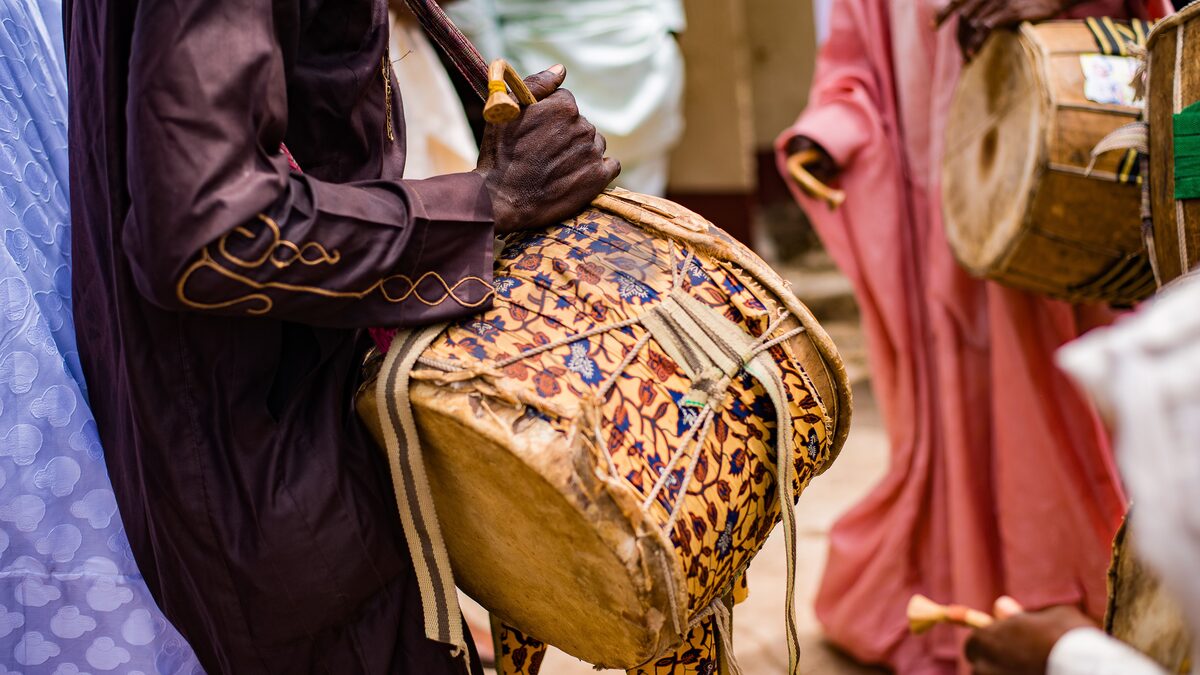
Start your prompt by naming the percussion you want. Shakers keep constant sixteenth-note motion in the background, a soft tireless hiss that fills the space between kicks. The talking drum and congas add human texture, hitting slightly early or late in a way that no rigid grid captures. Rimshots and woodblocks punctuate the groove with sharp accents. When you write a prompt, list these instead of trusting the model to guess. Something like "afrobeats with layered shakers, congas, talking drum accents, and a syncopated kick pattern" tells Suno far more than "African drums."
The interplay matters more than any single hit. A great afrobeats groove is a conversation between three or four percussion parts, each holding its own lane while locking together. Ask for that texture directly. Mention that you want the percussion to feel "loose and human, not quantized," because tightness is the enemy here. The pocket should feel slightly relaxed, like the players are riding just behind the beat. That laid-back tension is the vibe people mean when they say a track has swagger.
One practical tip: if a generation comes back sounding too busy, the problem is usually competing high-frequency parts. Regenerate with a simpler request, keeping the shaker and one lead percussion voice, and the groove will read more clearly. Afrobeats rewards space as much as density. The silence between accents is part of the rhythm.
It also helps to think about where each percussion part lives in the stereo picture, even if you cannot control that directly in the prompt. Producers often place shakers slightly to one side, congas to the other, and the kick dead center, which gives the groove width and lets each part be heard. When you describe a track as having "wide, layered percussion" or "spacious drum arrangement," you nudge the model toward that sense of room. A groove that feels crowded in mono opens up the moment the parts have space to spread out, and afrobeats has always been a genre that loves that openness. The dance floor needs air to move in, and so does the drum arrangement.
The log drum and the low end
If the shakers and congas are the surface of the groove, the low end is the engine underneath. Afrobeats and its cousins depend on a deep, rounded bass that you feel in your chest more than you hear in your ears. This is where the amapiano influence has reshaped the modern sound, and where the log drum earns its own paragraph.
The log drum is a percussive bass instrument that slides and bends, producing a rubbery, melodic thump that walks up and down under the beat. It is not a static bass note holding a chord. It moves, and that movement gives amapiano-flavored afrobeats its hypnotic pull. When you want this flavor, ask for it by name. A prompt like "deep log drum bassline with sliding pitch, amapiano-influenced low end" points Suno toward that specific texture rather than a generic sub bass.
For a more classic afrobeats feel, you might want a warmer, simpler bass that locks with the kick and stays in its pocket. Describe the relationship: "rounded bass that follows the kick drum, warm and full, sitting low in the mix." The word "warm" does real work in these prompts. It nudges the model away from the bright, aggressive bass of trap or EDM and toward the smoother tone afrobeats prefers.
Balance is everything down here. If the low end is too loud, the percussion loses its snap and the track turns muddy. If it is too quiet, the groove has no foundation and the dance floor stays still. When you review your generations, listen on the best speakers or headphones you have and check whether the bass supports the drums or fights them. Once you find a track where the low end and the percussion feel like one instrument, that is the one to keep and download.
Pay attention to how the bass and kick share the space, because this is where many home producers stumble. In a great afrobeats track, the kick and the bass take turns rather than sounding at the exact same instant, so each one gets its own moment to punch through. When they collide perfectly on every beat, the low end turns into a formless rumble. If a generation sounds boomy or vague at the bottom, try regenerating with a request for a "tight, punchy kick with a bass that answers between the kicks." That small shift in phrasing often produces a cleaner, more danceable low end. The people on the floor will not know why it feels better, but their bodies will.
Melody and the hook
Rhythm gets people moving, but melody makes them remember. Afrobeats melodies tend to be simple, repetitive, and instantly singable, built on short phrases that loop with small variations. The genre borrows heavily from highlife guitar lines, gentle synth plucks, and vocal runs that ride the top of the groove. The goal is not complexity. It is a hook so catchy that someone hums it after one listen.
When prompting for melody, keep your language focused on feel and instrument. Ask for "bright highlife guitar loop" or "soft mallet melody" or "airy synth pluck riff." Then describe the vocal approach if you want singing: melodic, laid-back, with call-and-response phrasing between a lead and background voices. Afrobeats vocals often blend languages and pidgin phrases, and they treat the voice as another percussion instrument, bouncing off the beat rather than sitting on top of it.
Repetition is your friend. A hook works because it comes back. In your prompt you can note that the chorus should be "repetitive and catchy, easy to sing along to." If you are writing your own lyrics to paste in, keep the chorus short and rhythmic, with vowel-heavy words that flow over the groove. You do not need dense storytelling in the hook. Save the detail for the verses and let the chorus be a chant people can shout back at a show.
One thing that trips up newcomers is trying to make the melody carry the whole track. In afrobeats, the melody serves the groove, not the other way around. If a generation feels flat, the fix is usually more rhythmic interest in the percussion, not a busier tune. Trust the drums to do the heavy lifting, and let the melody float above them, light and memorable.
The vocal delivery deserves its own attention, because afrobeats singing has a particular relaxed quality that sets it apart. Singers tend to slide into notes, bend phrases, and sit just behind the beat the same way the percussion does, giving the vocal a conversational, unforced feel. When you want that, ask for a "relaxed, melodic vocal with smooth phrasing" rather than a "powerful" or "belting" voice, which pulls the model toward a more Western pop delivery. Background vocals matter too. A lot of the genre's warmth comes from stacked harmonies and answering voices that fill out the chorus, so mentioning "layered background vocals" or "gang vocals in the hook" can add the communal, party feeling that defines a great afrobeats chorus.
Subgenres: afrobeats, afropop, and amapiano-adjacent
The word afrobeats gets used as a catch-all, but the sound splinters into several related styles, and knowing the differences sharpens your prompts. Understanding what each subgenre wants helps you steer Suno toward the exact feel in your head rather than a blurry average of all of them.
Classic afrobeats leans percussive and mid-tempo, with prominent shakers, a bouncing bass, and a party-ready energy. Afropop softens the edges, adding polished production, cleaner synths, and radio-friendly hooks aimed at a wide audience. The amapiano-adjacent style, sometimes called afro-amapiano, slows things down, pushes the log drum forward, and stretches the arrangement into a hypnotic, spacious groove that feels more like a slow burn than a sprint. There is also afro-fusion, which blends afrobeats with R&B, dancehall, or hip-hop, and afro-house, which pushes the tempo up for club floors.
Here is a quick reference to translate each style into a starting prompt. Treat these as seeds, then adjust the tempo, instrumentation, and mood to taste.
| Subgenre | Feel | Prompt starter |
|---|---|---|
| Classic afrobeats | Percussive, party-ready | Upbeat afrobeats, layered shakers and congas, bouncing warm bass, catchy highlife guitar hook, laid-back vocals |
| Afropop | Polished, radio-friendly | Smooth afropop, clean synth plucks, melodic sing-along chorus, glossy production, mid-tempo groove |
| Amapiano-adjacent | Hypnotic, spacious | Afro-amapiano, deep sliding log drum, airy pads, sparse percussion, slow hypnotic groove around 112 bpm |
| Afro-fusion | Genre-blending, soulful | Afro-fusion with R&B vocals, dancehall bounce, warm bass, emotive melodic hook, relaxed swing |
| Afro-house | Club-driven, energetic | Afro-house, four-on-the-floor kick, tribal percussion, rolling bassline, chant vocals, energetic 122 bpm |
When you use one of these starters, resist the urge to cram every idea into a single prompt. Pick a lane, generate a few versions, and listen for the one that captures the groove you want. You can always regenerate with small tweaks. Afrobeats production is iterative, and the model responds well to focused, specific requests rather than long lists of contradictory adjectives.
Ready to keep your favorite take?
Found an afrobeats groove that makes you move? Grab a clean copy so you can share it, loop it, or build on it later.
Open the free downloaderThe vibe and the tempo
Every genre has a feeling it is chasing, and afrobeats is chasing joy. Even the melancholy tracks carry a warmth, a sense that the groove will hold you up no matter what the lyrics say. When you prompt, spend a line on mood. Words like "sunny," "celebratory," "laid-back," and "warm" steer the whole arrangement toward that emotional center. The vibe is not decoration. It is the reason the genre connects across so many countries and languages.
Tempo shapes the vibe more than any other single number. Classic afrobeats often sits between 100 and 118 beats per minute, fast enough to dance but relaxed enough to sway. Amapiano-flavored tracks pull down toward 110 or lower, letting the log drum stretch and breathe. Afro-house climbs above 120 for club energy. When you know the tempo you want, put it in the prompt. Suno handles explicit bpm requests well, and giving a number keeps the groove from drifting too fast or too slow for the feel you are after.
Arrangement is the last piece of the vibe. Afrobeats tracks tend to build patiently, adding one percussion layer at a time, dropping the bass out for a bar to create tension, then bringing everything back for the chorus. If you want that dynamic motion, describe it: "builds gradually, drops the bass before the chorus, full groove in the hook." These structural cues help the model shape a track that moves through sections instead of looping the same texture for three minutes.
It is worth thinking about how the track opens, because the first few seconds set the whole tone. Many afrobeats records begin with a solo percussion loop or a short vocal ad-lib before the full groove drops, which pulls the listener in and builds anticipation. You can request this with a line like "intro starts with shakers and a vocal ad-lib, then the full groove enters." Little touches at the edges of the arrangement, an ad-lib here, a percussion fill there, a quick breakdown before the final chorus, are what make a track feel produced rather than looped. The genre has always been playful about these small surprises, so do not be afraid to ask for them. Each one gives the listener a reason to stay on the floor a little longer, and that is exactly the effect afrobeats has chased from the very beginning.
Once you have a generation that nails the groove, the low end, the hook, and the vibe together, you have something worth keeping. Play it back a few times to make sure it holds up, then download the track so you can add it to a playlist, share it with friends, or use it as a foundation for your own remixing. The best afrobeats you make with these tools will be the ones where you started with the rhythm and let the joy build from there.
A final note on making something that feels like yours. The prompts here are starting points, not formulas. The producers who get the most out of an AI afrobeats generator treat it like a collaborator, feeding it specific ideas, listening closely, and steering each generation a little closer to the sound in their head. Keep your own hooks, your own tempo choices, and your own sense of what makes a groove move, and the tracks you create will carry a signature that no generic prompt ever could. Start with the drums, trust the bounce, and the rest of the song will follow.