 Suno Downloader AI
How to make an anniversary party song with AI

Maggie has been planning her parents' twenty fifth anniversary party for three months. The hall is booked, the caterer is confirmed, her cousins are flying in. But the thing that keeps her up at night is not the seating chart. It is the feeling that after all this effort, the party will still feel like every other party, and twenty five years of a marriage deserves more than a rented room and a slideshow. What she wants is a moment that stops the room, a song that is actually about her parents, not a chart hit that happens to have the word "forever" in the chorus. This is the story of how she made one with an AI tool, and how you can do the same for whatever milestone you are marking.
Starting with the story, not the software
Maggie's first instinct was to open Suno and start typing. That is the wrong first move, and she figured it out quickly. A song about a couple is only as good as what you know about them, so before touching any tool she sat down with a notebook and wrote out everything she could remember about her parents' life together. Not the polished version, the real one.
She wrote how they met, at a friend's cramped apartment party where her dad spilled a drink on her mom's shoes and spent the rest of the night apologizing. She wrote the year they married, the tiny first apartment with the radiator that clanked all winter, the move across the country for a job that did not work out, the way they laughed about it now. She wrote about the kids, about her dad's terrible puns, about the phrase her mom says every single morning, about the dog they buried in the backyard and still talk about. None of this was lyrics yet. It was raw material, and the more of it she gathered, the more the song had to work with.
If you are doing this, spend real time here. Talk to people who know the couple. Ask the couple's friends for the story they always tell. The specific, slightly embarrassing, deeply true details are what will make guests turn to each other and whisper "that is so them." Generic love never does that.
Maggie found it helped to sort her notes into buckets as she went. One list for the beginning, how they met and got together. One for the milestones, the wedding, the kids, the moves, the jobs. One for the small stuff, the daily jokes and phrases and habits that make up the texture of a marriage. And one for the feeling, the things people say about her parents when they describe them, like how they still hold hands at the grocery store. That last bucket turned out to be the most useful, because a song lives more in feeling than in facts, and having a page of true feelings to draw on made the writing far easier. When you gather your own material, do not just collect events. Collect the way the couple is, because that is what you are really trying to put into a song.
Turning a marriage into lyrics
The hard part is that you cannot fit twenty five years into three minutes, and trying to will give you a song that is just a list of dates. Maggie learned to choose. She picked a handful of moments that told the shape of the story rather than every event in it. The meeting, because every couple's story starts there. One hard stretch, because a marriage that lasts is not one that never struggled, and naming the struggle makes the endurance mean something. And the present day, the two of them older and still choosing each other.
She built the lyrics around those three beats. The first verse was the party and the spilled drink, light and a little funny. The second verse moved through the years, the moves and the kids and the small ordinary mornings, without trying to catalog all of them. The chorus was not about events at all; it was the feeling underneath, the idea that after everything, they were still here, still laughing at the same old jokes. The bridge gave her one line to their kids, a small thank you woven in without turning the whole song into a speech.
When she moved to the AI tool, she used its section tags so the melody would follow that arc, marking the verses, the chorus, and the bridge clearly. She kept her lines short and singable, because she had noticed that long, crowded lines get rushed and mumbled by the AI. She wrote the way people actually talk, then trimmed until each line could be sung slowly with room around it. An inside joke landed better as a quick, glancing reference than as a fully explained anecdote, since the people in the room already knew the story and just needed the wink.
She also learned to read every line out loud before committing to it. A lyric can look fine on the page and feel stiff or awkward the moment you try to sing it, and since the AI is going to sing exactly what you give it, the page test is not enough. Reading aloud caught the lines that were a syllable too long, the rhymes that felt forced, and the one verse where she had crammed in three separate memories that needed to be two. Cutting is uncomfortable when every detail feels important, but a song that keeps the best two thirds of your material and sings smoothly beats one that keeps everything and stumbles. When she finally had a version she could read aloud without wincing, she knew it was ready to hand to the tool.
Finding the right style for the feeling
Maggie's parents are not power ballad people. Her dad plays old records on Sunday mornings, soft ones, a lot of gentle guitar and warm voices. So when she wrote her style prompt, she reached for that world rather than something big and glossy. She asked for a warm acoustic sound, an unhurried tempo, a heartfelt but restrained vocal, the kind of song that feels like it is being sung to one person across a kitchen table rather than performed on a stage.
Getting there took her a few rounds. The first version came back glossier than she wanted, with a bright pop production that felt like a commercial rather than a keepsake. She added the words "acoustic" and "intimate" and cut anything that suggested polish, and the second batch was much closer. This back and forth is the normal way of working with these tools, not a sign you are doing something wrong. You describe the feeling, listen to what comes back, adjust the words that missed, and generate again. Each pass teaches you which of your words the tool is responding to, and after a few tries you develop a feel for the exact phrasing that gets your sound. Budget a little time for this rather than expecting the first result to be the one.
The style has to match the couple, not the size of the party. A big room can tempt you into a big, dramatic sound, but a tender song in a loud hall actually works better, because it makes people lean in and quiet down. If the couple you are celebrating loves a particular kind of music, point the AI at that feeling. Words like "warm," "heartfelt," "intimate," "nostalgic," and "gentle" steer it toward sincerity, while words like "epic" and "anthemic" push it toward the glossy sound you probably want to avoid for a moment this personal. Maggie generated several versions with slightly different style wording and listened to each one imagining her mom's face hearing it. That test, picturing the actual person receiving the song, told her more than any technical judgment could.
Surprise reveal or first dance replay
Here Maggie had a real decision to make, and it is one you will face too. There are two natural ways to use a custom anniversary song, and they create very different moments. The first is the surprise reveal: nobody knows the song exists, and at a chosen point in the evening, you dim the lights, ask for quiet, and play it while the couple realizes, line by line, that this song is about them. It is a gift that unfolds in real time, and the reactions can be extraordinary.
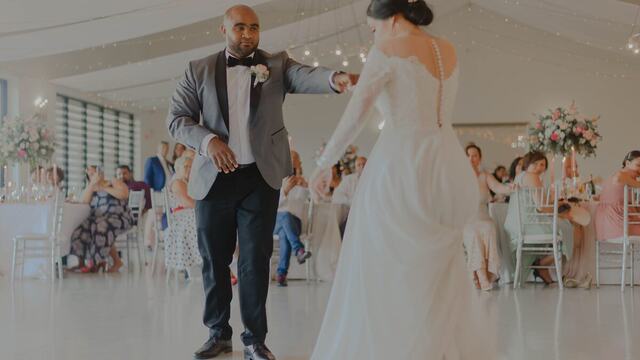
The second is the first dance replay. Many couples had a wedding song, a first dance, decades ago. Instead of a total surprise, you can invite them to dance again, and play your custom song, which weaves their original first dance song's spirit into new lyrics about the years since. This is less about shock and more about a full circle feeling, the same two people slow dancing after all this time, now to a song that includes everything that happened in between.
Maggie chose the surprise reveal, because her parents are private and would have been self conscious being asked to dance on command, but they would be genuinely moved to sit and simply listen. That is the real question behind the choice: what would this specific couple actually enjoy, versus what looks good in your head? A shy couple may hate being pulled onto a dance floor and love sitting together listening. An outgoing couple may adore the dance. Plan the moment around who they are, and everything else follows.
Whichever path you pick, plan the practical staging as carefully as the song itself. Decide in advance who cues the music, where the couple will be sitting or standing, and how you will get the room quiet before you press play. Maggie asked her uncle to handle the toast that led into the song, so she could focus entirely on the phone in her hand and the timing. She also decided exactly when in the evening the moment would happen, after dinner but before the cake, when people were settled and attentive but not yet tired. A great song played at the wrong moment, over a noisy room or during the chaos of dessert being served, loses half its power. Think of the song and the moment as one thing you are building, not two, and rehearse the handoff in your head until it feels certain.
Getting the length right for the moment
A song you are going to play for a seated, listening room has a different ideal length than one you are dancing to. Maggie kept hers to a little under three minutes. Long enough to tell the story and let the emotion build, short enough that it ended while the room was still fully with it rather than starting to shift in their seats. She had made a longer version first, close to five minutes, and when she played it back she felt her own attention drift in the third verse. So she cut it down, dropping a verse and tightening the bridge, and the shorter version hit harder precisely because it did not overstay.
If you are doing a first dance replay instead, you have a little more room, since dancing gives people something to do with the time, but even then, three to four minutes is plenty. The instinct to cram in more of the couple's history usually works against you. A song is not a biography. It is a feeling held long enough to land and then released before it tips into too much. When in doubt, make it shorter than you think you should, and let the moment end on a high rather than a fade.
A good way to judge length is to play your draft for one person who does not know the couple well, and watch when their attention drifts. If a stranger stays with it to the end, the people who love the couple certainly will. If even a stranger starts to fidget, the song is too long, and you should find the verse doing the least work and cut it. Maggie did this with a coworker, who teared up at the chorus despite never having met her parents, and that reaction told her the song was landing on its own strength rather than only on family sentiment. That is the bar worth aiming for: a song that would move a room even without the shared history, made unforgettable by the fact that the history is real.
Ready to save your anniversary song?
Paste your Suno link, choose MP3 or WAV, download. Free, no sign up.
Open the free downloaderDownloading it so it plays no matter what
Two weeks before the party, Maggie did the smartest thing in this whole process. She stopped trusting the internet. She had planned to just pull up the song from her Suno account on the night, but a friend who works events talked her out of it. Venue Wi-Fi fails. Cell signal in a banquet hall basement is often nothing. An app can log you out, an account page can fail to load, and the one time it happens will be the exact moment you have a silent room waiting for the emotional high point of the evening.
So she downloaded the actual file. She ran her finished song through a free downloader and saved it as an MP3, a small, universal file that plays on any phone, laptop, or speaker without needing a connection or an app. If your venue is running the song through a serious sound system and you want the absolute best fidelity, you can choose WAV instead, which is a larger, uncompressed file, but for the vast majority of parties MP3 is indistinguishable to the room and far easier to handle.
Then she tested it the way you should test anything that matters. She put the file on the phone she planned to use, switched that phone to airplane mode, and played the song straight through with no internet at all. It played perfectly, which meant it would play perfectly in the hall regardless of the Wi-Fi. She copied the file to a second phone as a backup, and even dropped it onto a small USB stick in case the venue wanted to play it through their own system. Three copies, none of them depending on a signal. That is the difference between hoping the moment works and knowing it will.
The night it all came together
The reveal happened right after dinner. Maggie's uncle tapped his glass, the room quieted, and she said a few short words about how you cannot really sum up twenty five years, but somebody tried anyway. Then she pressed play on the phone in her hand, offline and certain, and the song filled the room. Her dad recognized the spilled drink line within about ten seconds and put his hand over his mouth. Her mom cried, the good kind. By the chorus, half the room was crying with them, and the other half was grinning at the two of them holding hands at the head table.
It lasted under three minutes, and then it was over, and the room burst into applause while the feeling was still at its peak. That is what a custom song does that a playlist cannot. It is not background. It is the couple's own story, sung back to them in front of everyone who loves them, on a night built to celebrate exactly that. Whatever milestone you are planning, the recipe is the same: gather the true story, choose the moments that matter, pick a style that fits who they are, plan the moment around their personality, keep it tight, and download it so nothing can go wrong. Do that, and you will not just throw a party. You will give them something they can play again on every anniversary that comes after.