 Suno Downloader AI
AI classical music: an honest guide to what it can do
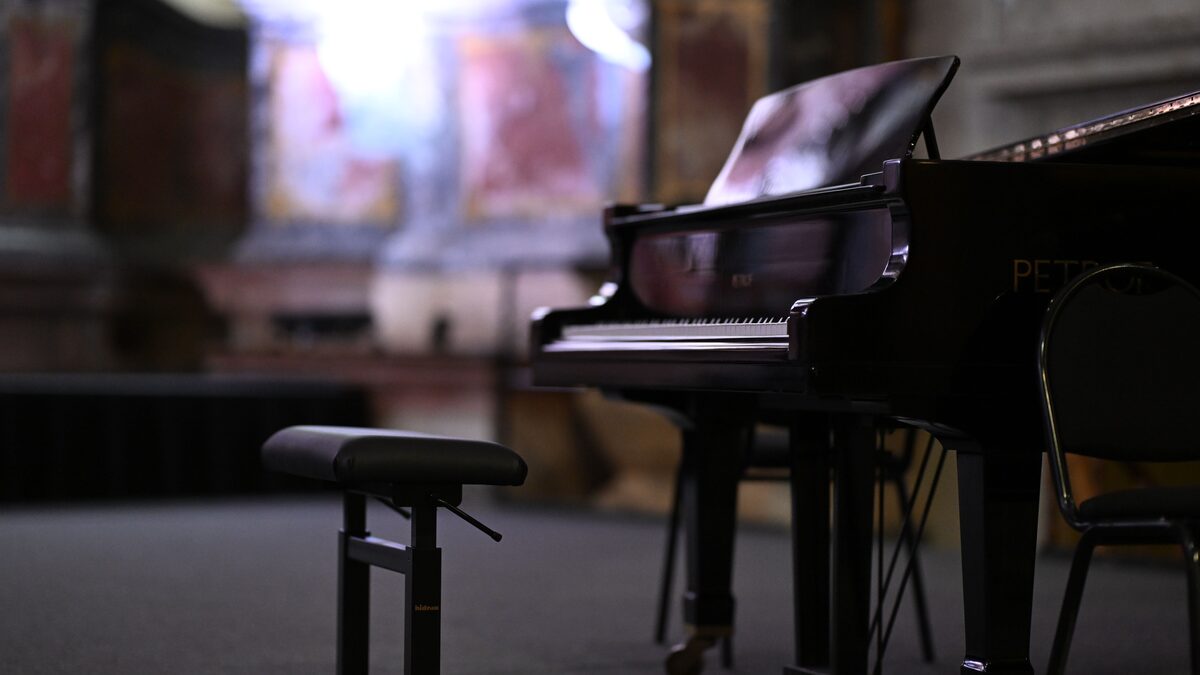
Classical music carries centuries of craft in its bones. A single string quartet movement can hold four independent voices that argue, agree, and resolve across ten minutes without a word of text to lean on. That depth is exactly what makes it the hardest test for any music model. When people ask whether AI classical music is any good, the honest answer is that it depends enormously on which era and which form you are asking for, because the demands change wildly from one corner of the repertoire to the next.
This guide walks through the tradition the way a listener actually experiences it, era by era and form by form. The goal is not hype. It is a clear picture of where an AI classical music generator gives you something genuinely usable, where it gives you a convincing sketch, and where it quietly falls apart. Suno is the tool in the examples, but the thinking applies to any generator you try. Once you understand what each style is really asking for, your prompts get sharper and your results stop feeling like a slot machine.
It also helps to set expectations about what you are really making. A generator is not going to hand you a finished concert work with a performer's biography attached. What it gives you is a recording, a piece of audio that either captures a mood and a texture or does not. That framing matters, because classical listeners are trained to notice tiny things, an out-of-place voicing, a phrase that ends a beat too soon, a swell that arrives without preparation. The more you know about what each era prizes, the faster you can tell a keeper from a near miss, and the less time you waste second-guessing a take that was never going to work.
Baroque and the sound of counterpoint
The Baroque period, roughly Bach through Handel and Vivaldi, is built on counterpoint. Several melodic lines move at once, each one complete on its own, weaving together by strict rules of harmony and motion. A good fugue is a small machine of logic, and part of the pleasure is hearing the machine run. This is precisely the thing that is hardest to fake. A model can produce the surface texture of Baroque very convincingly. You will hear the harpsichord, the walking bass, the ornament, the bright terraced dynamics. What it cannot reliably produce is a true fugue where a subject is stated, answered a fifth up, and developed with real inversion and stretto.
So the practical rule for Baroque is to ask for the feel, not the form. A prompt for a lively Baroque concerto in the style of a fast Vivaldi movement, with bright strings and harpsichord continuo, tends to land beautifully. It sounds period-correct, it has energy, and it works as background or as a mood piece. Ask specifically for a four-voice fugue and you will often get something that starts promisingly and then loses the thread, because the model is imitating the sound of counterpoint rather than obeying its logic. Knowing that difference saves you a dozen wasted attempts. Lean into the concerto, the suite, the ornamented aria, and treat strict fugue as a bonus rather than a target. When a take does capture the bright, driving motion you wanted, download the finished track right away, because Baroque prompts can be streaky and the good ones are worth keeping.
Instrumentation is your other big lever in this era. The Baroque sound depends on a small, specific palette, and naming it steers the result more than any adjective can. The continuo, that engine room of harpsichord and cello or bassoon holding the harmony and the bass together, is the heartbeat of the period, so asking for it explicitly pulls the model toward the right texture. Terraced dynamics, the abrupt jump from loud to soft rather than a gradual swell, is another period marker worth requesting by feel, since it keeps the music from drifting into a more modern shape. If you want something gentler than a concerto, the slow movement of a sonata, with a solo violin or flute singing over a walking bass, is a reliably lovely result. The through-line is the same as everywhere in Baroque, keep the request rooted in sound and instrument rather than in strict formal rules, and the era rewards you.
The romantic era and big emotion
If Baroque is about logic, the Romantic era is about feeling on a grand scale. Think of the sweep of a Tchaikovsky theme, the storm and tenderness of Chopin at the piano, the enormous orchestral swells of late Brahms and Rachmaninoff. Here the emotional arc matters more than contrapuntal rigor, and this is territory where AI classical music genuinely shines. Models have absorbed an enormous amount of Romantic phrasing, so they are fluent in the rising sequence, the yearning suspension, the big cadence that arrives just when you want it.
The trick with Romantic prompts is to name the emotion and the instrument clearly, then let the model find the melody. A prompt asking for a sweeping Romantic piano piece, tender and nostalgic, building to a passionate climax, gives the generator exactly the kind of guidance it uses well. You can push further by naming a texture, solo piano versus full orchestra, or by asking for rubato, that expressive stretching and pulling of tempo that defines Romantic playing. What you should not expect is the structural discipline of a full sonata form with a proper development section. The model gives you the mood and the gestures, not the long-range architecture. For most listeners and most uses, from a reflective video score to a piece of personal music, the mood is what carries the day, and that is why the Romantic register is often the most satisfying place to start.
Minimalism and modern classical
Minimalism changed the question entirely. Composers like Philip Glass, Steve Reich, and Arvo Part built music out of repetition, slow change, and patience. A pattern repeats, then shifts by one note, then shifts again, and the interest lives in the gradual transformation and in the space around the notes. This turns out to be a natural fit for AI classical music, because repetition and slow evolution are far easier to sustain than a ten-minute developing argument. When you ask for a minimalist piano piece with gentle repeating arpeggios, slowly evolving over a calm bed of strings, the results are frequently excellent and ready to use.
Spiritual minimalism, the hushed and slow-moving world of Arvo Part and his kin, deserves its own mention because it may be the single most reliable style in this whole survey. The music is built on stillness, on long held tones, simple bell-like figures, and silences that are part of the composition rather than gaps in it. A generator handles this beautifully because there is no long argument to sustain and no dense counterpoint to track, only mood and space. A prompt for a slow, meditative piece for solo piano and distant strings, sparse and prayerful, with long silences, tends to come back close to finished. If you need calm, reflective music for a video, a meditation, or a quiet moment, this corner of modern classical is where the technology is at its most dependable, and it is worth reaching for first.
The broader world of modern and contemporary classical is more of a mixed bag. Ambient and neoclassical styles, the kind associated with a solo piano and a soft string pad, are a strong suit. The music is intimate, texture-driven, and forgiving of loose structure, so it plays to every advantage the model has. Denser modernist writing, the spiky atonal language of the mid twentieth century or complex rhythmic music with shifting meters, is much harder to get right, and you will often hear the model default back toward something more consonant and expected. If your taste runs toward the calm end of the modern spectrum, you are in luck. If you want thorny and difficult, temper your expectations and plan to sift through more takes.
Film-classical and the easy win
There is one corner of the orchestral world where AI performs so well that it feels almost unfair, and that is film-classical, the modern cinematic orchestral style you hear behind trailers and dramatic scenes. This music is closer to the emotional directness of the Romantic era than to the strict forms of the Baroque, and it is written to serve a mood rather than to develop a theme across twenty minutes. Those are exactly the conditions in which a generator does its best work. Ask for an epic orchestral piece with soaring strings, deep brass, and a pounding timpani rhythm, building to a heroic climax, and you will very often get something you could drop straight into a project.
Part of why film-classical works so well is that it embraces the modern hybrid orchestra, the blend of real-sounding strings and brass with electronic textures, big cinematic percussion, and low pulsing synths. That hybrid palette is forgiving and dramatic, and it is exactly the sound people picture when they think of trailer music. You can steer it with production words as much as instrument names, so asking for huge cinematic drums, a deep sub-bass pulse, or shimmering high strings shapes the texture in a way the model responds to immediately. Layering an emotional arc into the prompt is the finishing touch, since film music is written to move from one state to another. A phrase like begins quiet and fragile, then swells into a huge heroic climax gives the take a shape to follow, and it is the difference between two flat minutes and two minutes that feel like they are going somewhere.
This is the easy win, and it is worth naming as such. If your real goal is emotional orchestral music for a video, a game, a presentation, or a personal soundtrack, you do not need the model to write a symphony. You need it to write two minutes of feeling, and film-classical is built for precisely that. You can steer it finely by naming the emotional turn you want, from tense and building to triumphant, or from fragile and quiet to devastating. Because these takes are so usable, this is the style where you will most often hear a version and immediately want to save it, so download the finished track as soon as one lands the way you imagined. For deeper mood-by-scene technique, the companion piece on cinematic scoring goes further than we can here.
Where AI classical falls short, and how to work with it
Being honest about the strengths means being just as honest about the limits. The first and biggest limit is long-range structure. Human classical music is often about memory, a theme stated early, transformed in the middle, and returned to at the end so the whole thing feels like a single thought. AI classical music tends to live in the moment. It produces gorgeous phrases and convincing textures, but it rarely builds and then pays off a theme across a full movement. For a two or three minute piece this barely matters. For anything longer, you feel the absence of a plan.
The second limit is performance detail. Real classical recordings carry the fingerprints of players, the breath before a phrase, the slight push and pull of ensemble timing, the way a violinist leans into a high note. Generated performances can sound a little even, a little too clean, missing the small human imperfections that make a live recording feel alive. Solo piano and small textures hide this better than a big exposed string section does, which is another reason intimate prompts often outperform grand ones.
The third limit is naming. Asking for music in the style of a specific living or famous composer is unreliable and often blocked, so you get better and more consistent results by describing the sound itself. Instead of a composer name, reach for the ingredients, the instruments, the tempo, the mood, the era's texture. That single habit, describing rather than citing, does more to improve your results than any other tweak.
Working with these limits is mostly about matching your ambition to the form. Keep pieces short, favor intimate textures over huge exposed ones, describe emotion and instrumentation plainly, and treat any complex form as a happy accident rather than a promise. Generate several takes, because variance is high and the difference between the third and the seventh attempt can be dramatic. When one finally captures the feeling you were chasing, download the finished track so you keep the exact version, since re-rolling rarely reproduces a specific magic take.
A quick prompt starter by era and mood
Use these as seeds rather than scripts. Name the instruments and the feeling, keep the length modest, and generate a handful of versions before you judge a style.
| Era or mood | Prompt starting point |
|---|---|
| Baroque, bright and lively | fast Baroque concerto, bright strings and harpsichord continuo, energetic and ornamented |
| Romantic, tender | sweeping Romantic solo piano, nostalgic and warm, building to a passionate climax with rubato |
| Romantic, grand orchestral | lush Romantic orchestra, soaring strings and warm horns, longing and cinematic |
| Minimalist, calm | minimalist piano, gentle repeating arpeggios slowly evolving over a soft bed of strings |
| Neoclassical, intimate | quiet neoclassical piano with subtle string pad, reflective and spacious, soft dynamics |
| Film-classical, heroic | epic orchestral score, soaring strings, deep brass, pounding timpani, building to a triumphant climax |
| Film-classical, tense | dark cinematic orchestra, low strings and tense percussion, slowly rising dread |
Taken together, the picture is encouraging as long as you meet the music where it is strong. AI classical music is a fine companion for mood, texture, and emotion, especially in the Romantic and film-classical registers and in calm minimalist writing. It is a weaker partner for strict counterpoint and long developed forms, and it will not replace a great human recording's living detail. Prompt for what it does well, generate generously, and save the takes that move you.
Turn your best take into a keeper
Found a version worth holding onto? Save a clean copy in seconds and build your own library of orchestral cues and piano pieces.
Open the free downloader