 Suno Downloader AI
How to make an engagement song with AI
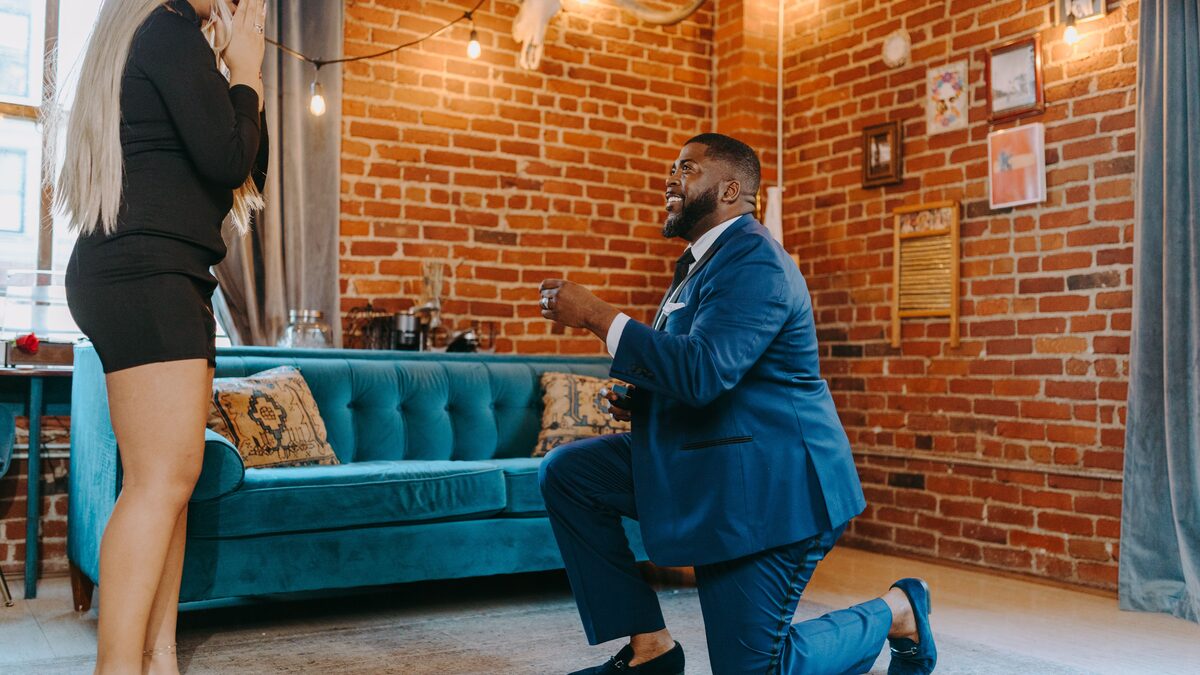
Sam had the ring for three weeks before figuring out the rest. The location was set, a quiet spot by the water where they had walked on their first date. The words were half-rehearsed. But something was missing, and it took a while to name it. Sam wanted music. Not a famous love song that belonged to strangers, and not a random ballad off a playlist, but a song that was actually about the two of them, with their story in the lyrics, ready to play the second the moment arrived. The problem was that Sam is not a musician and cannot write a note. This is the story of how that song got made anyway, and how you can make one too.
If you are planning to propose, a song written for your relationship does something no store-bought track can. It says you thought about this for weeks, that you gathered up the small private things that only the two of you know and turned them into something you can hear. AI tools like Suno make it genuinely possible, even if you have never made music in your life. What follows is the path Sam took, and it maps onto almost any proposal.
Before we follow the story, one reassurance is worth giving. You do not need to read music, play an instrument, or understand anything technical about how songs are built. The AI handles the melody, the arrangement, and the singing. Your job is the human part, the part no tool can do for you: knowing your partner, knowing your story, and choosing which pieces of it belong in a song. If you can describe your relationship to a close friend, you can make this song. Everything else is just steering the tool with clear words and a little patience.
Deciding what the song should actually say
Sam's first instinct was to jump straight into the tool and start generating. That is the wrong first move, and it is worth resisting. Before you touch any AI, sit down and decide what you want the song to say. A song is short. You get a couple of verses and a chorus, which is not a lot of room, so you have to choose the few things that matter most.
Sam started by writing down everything, a long messy list of memories and feelings with no order to it. The night they got caught in the rain. The nickname nobody else uses. The way Sam's partner laughs at their own jokes. The plan they always talked about, moving somewhere near the coast one day. Then Sam crossed most of it out. The song could not hold all of it, and trying to cram it in would have made it a list instead of a feeling. What survived was three or four specific things and one clear message underneath them all: I want the rest of my life to look like this.
That underlying message is the spine of the song. Everything else hangs off it. Before you write a single lyric, know what your spine is. It might be a promise, a question, a memory, or simply gratitude that this person exists. Once you know it, every other choice gets easier.
Turning your relationship into lyrics
This is where the magic lives, and it is the part people get wrong most often. The difference between a forgettable AI song and one that makes your partner cry is specificity. Generic lyrics about love and forever could apply to anyone. Your lyrics should be so particular to the two of you that no other couple on earth could use them.
Sam fed the AI real details. Not "we met and fell in love" but the actual place, a bookstore cafe on a Tuesday afternoon. Not "you make me happy" but the specific thing, the way a certain song on the radio always got turned up. When you write your prompt or your lyrics, hand the AI these concrete pieces. Include your partner's name if you want it sung out loud, because hearing your own name in a song written for you is a feeling that is hard to describe. Include the inside joke that will make them laugh through the tears. Include how you met, where you have been, and where you want to go.
You can write the lyrics yourself and paste them in, or you can describe the story and let the AI draft them, then edit. Sam did a mix. Sam wrote the chorus by hand because that was the important part, the promise, and let the AI shape the verses around a list of details. When the AI returned something too flowery or too vague, Sam pushed back, regenerated, and swapped lines until every word felt true. Do not accept the first draft just because it rhymes. Keep going until it sounds like something you would actually say.
One warning worth heeding: avoid trying to make the lyrics clever. A proposal song is not the place to show off wordplay. Plain, honest lines land harder than anything fancy. If a line sounds like a greeting card, cut it. If a line sounds like the way you actually talk to your partner at the end of a long day, keep it.
Sam also learned to read the lyrics out loud before committing to them. On the page a line can look fine, but spoken aloud it sometimes sounds stiff or false, and if it sounds off when you say it, it will sound worse when it is sung. Reading them out loud caught two lines that were trying too hard, and cutting them made the whole song feel more like a real person talking. Do the same with yours. Sit somewhere quiet, read the draft slowly, and listen for any line you would be embarrassed to actually say to your partner's face. Those are the lines to fix.
There is a balance to strike between happy and heavy. A proposal song can be tender without being sad, and it can be joyful without being goofy. Sam wanted the song to feel like the best version of an ordinary evening between them, warm and a little bit playful, with one line near the end that turned serious and asked the real question underneath. That shape, mostly warm with one moment of weight, tends to land better than a song that is solemn from the first word. Let your partner smile through most of it and feel the lump in their throat only when it counts.
Picking a style that feels tender
Sam knew the water spot would be quiet, maybe a little breeze, no crowd. A big produced pop anthem would have felt wrong there. The style of the song has to match the moment you are planning, and for most proposals that means something intimate and warm rather than loud.
The safest choices are the ones that put the voice and the words front and center. A solo acoustic guitar feels honest and unforced. A soft piano ballad feels timeless and a little bit formal in a good way. Gentle, stripped-back pop works if your relationship has a lighter, more playful feel. When you prompt the AI, describe not just the instrument but the mood. Words like tender, warm, intimate, heartfelt, and gentle steer Suno toward something delicate. Ask for sparse arrangement so the music does not crowd the words. Sam's prompt landed on "soft acoustic ballad, fingerpicked guitar, warm intimate male vocal, tender and heartfelt, sparse and simple," and that got close on the second try.
Think about the physical space too. If you are proposing outdoors with ambient noise, a song with a clear strong vocal cuts through better than a whispery one. If you are somewhere silent and private, you can go as soft and delicate as you like. Match the song to the room, not just to your taste.
Getting the vocal right
The voice carries the emotion, so it is worth spending time here. Sam generated several versions with different vocal characters before finding one that felt sincere rather than performed. AI vocals can sometimes sound slick in a way that undercuts a heartfelt song, so listen specifically for warmth and a little imperfection. You want a voice that sounds like it means it.
Decide whether you want a voice that roughly matches you, the person proposing, or a neutral voice that simply tells the story. Some people like the idea that the song is in their own imagined voice, singing to their partner. Others prefer a clear, beautiful vocal that stands a little apart. Neither is wrong. Try both and notice which one makes you feel something when you play it back. That gut reaction is the best test you have.
Pay attention to how the AI sings your partner's name and any unusual words. Names sometimes come out mispronounced, and there is nothing worse than the AI mangling the most important word in the song. If it happens, try spelling the name differently in the lyrics to nudge the pronunciation, or regenerate until it lands right. This small detail is worth the extra ten minutes.
Give yourself more than one evening for this. Sam spread the work over several nights, generating a few versions, sleeping on them, and coming back with fresh ears. A song that sounds perfect at midnight sometimes sounds ordinary the next morning, and the reverse happens too, where a version you almost deleted turns out to be the one. There is no cost to generating again, so be patient and let the right one reveal itself. The point is not to make a technically flawless recording. The point is to make the one that makes your chest tighten when the chorus comes in, because that is the reaction your partner will have too.
Making it the right length for the moment
Sam almost made a mistake here, planning a full three-and-a-half-minute song. Then Sam imagined actually standing there, ring out, while three and a half minutes of music played. That is a very long time to hold a pose and a face full of emotion. Proposals are short and intense, and the song has to fit that.
For most proposals, ninety seconds to two minutes is plenty. You want enough time for the key verse and the chorus to land, for the message to arrive, and then you want to be able to speak. If your plan is to play the song and then propose, a shorter song keeps the energy tight. If the song is background while you talk, even shorter is fine, and you can fade it under your voice. Sam ended up with a version just under two minutes, with the most important lines up front in case emotion cut the moment short.
You can control length in Suno by structuring the lyrics tightly, a verse, a chorus, one more verse, and a final chorus, without long instrumental stretches. Trim any intro that makes you wait too long to reach the words. When you are standing there with a ring, every second of instrumental buildup feels like an hour, so get to the heart of the song quickly.
Rehearsing so nothing feels awkward
Sam did one more thing that made all the difference, and it is the step almost everyone skips. Sam rehearsed with the actual song. Not just imagining it, but standing in a quiet room, pressing play on the real file, and walking through the whole thing from the first note to the moment of asking. This felt a little strange the first time, but it turned up problems that would have been disasters on the day.
The first rehearsal revealed that Sam had planned to start talking too early, right over the opening line, which buried the words that mattered. Moving the words to a pause in the music fixed it. The second rehearsal showed that two minutes of standing and listening is a genuinely long time, and Sam learned to hold the moment instead of rushing to fill the silence. By the third run-through, the whole thing felt natural, the timing of when to reach for the ring, when to speak, when to let the chorus carry the weight.
Rehearse yours the same way, ideally more than once, and ideally out loud. Learn where the emotional peak of the song falls so you can time your words to it. Know exactly how you will start the music, whether from your pocket, a bag, or a hidden speaker, so the mechanics are invisible on the day. The more the practical side becomes automatic, the more you can be fully present when it counts, which is the whole point.
Ready to save your engagement song?
Paste your Suno link, choose MP3 or WAV, download. Free, no sign up.
Open the free downloaderDownloading it so it plays when the moment comes
Here is the part Sam thought about most, because it is the part that could go wrong. The proposal spot was down by the water, and the phone signal there was weak. Streaming the song from an app was not an option. If the connection stuttered or an ad interrupted or the app decided to buffer at the worst possible second, weeks of planning would collapse in real time. The only safe answer is to have the song saved as a file on your device, playing from local storage with no internet needed at all.
Once the song sounded right, Sam took the Suno share link and ran it through a free downloader to save a clean copy. MP3 is the practical choice for playing from a phone, since it works on every device and the file is small. If you want the best possible quality, for a nicer speaker or just to keep a pristine version forever, choose WAV instead. Save it to the phone you will actually carry, not a laptop sitting at home.
Then Sam tested it the only way that counts. Phone on airplane mode, no signal at all, press play. It worked, which meant it would work at the water too. Set your device so it will not lock or sleep in the middle of the song, silence every notification so nothing chimes over the most important moment of your life, and set the volume ahead of time so you are not fumbling with buttons when your hands are shaking. Sam even put a second copy on a backup phone, tucked in a jacket pocket, because there is no second take on a proposal.
The moment itself
When the day came, Sam did not have to think about the technology at all. The song was on the phone, tested, ready, volume set, notifications off. Sam pressed play, the first soft guitar notes came out over the water, and the lyrics started telling their story back to them, the bookstore cafe, the song on the radio, the plan to live near the coast one day. By the time the chorus arrived with the promise in it, there was no need to say much. The song had already said it. Sam just had to ask the question.
That is what a personal engagement song does. It carries the weight of everything you feel but cannot quite get out in the moment, and it does it in your partner's own story, with the details only the two of you share. You do not need to be a musician. You need to know what you want to say, feed the AI the true specific pieces of your life together, choose a tender style, get the voice and the length right, and download the result so it plays flawlessly when it matters. The tool does the music. You bring the love, and that was always the part that counted.