 Suno Downloader AI
AI jazz music: an honest look at what works
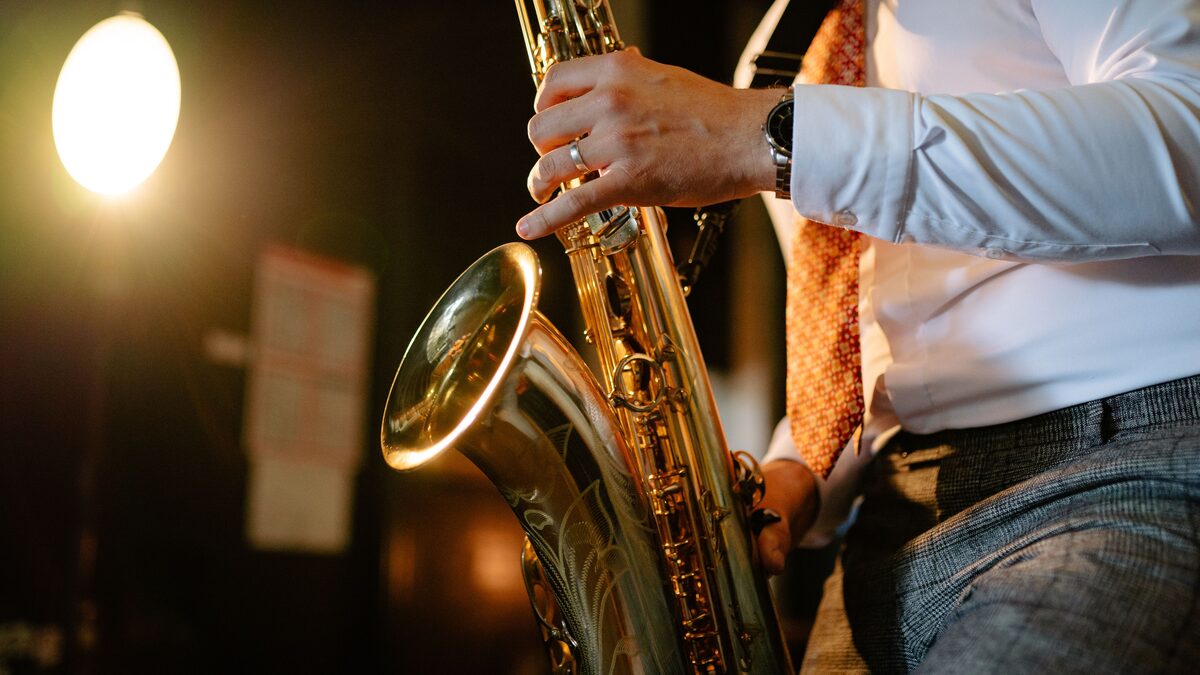
Jazz is a strange genre to hand to a machine. Its whole reputation rests on the things that are hardest to write down: the split-second decision a soloist makes, the way a drummer leans slightly behind the beat, the conversation between players who are listening as much as they are performing. Jazz is improvisation made permanent. So the honest question is not whether an AI jazz generator can produce something that sounds like jazz. It can. The honest question is how close it gets to the parts of jazz that actually matter, and where the seams still show.
This article is written for people who love the music and want realistic expectations. I am not going to pretend AI jazz music is indistinguishable from a live quartet, because it usually is not, and anyone with a trained ear will hear the difference. But I am also not going to dismiss it, because in several styles it produces genuinely usable, pleasant results, and understanding which styles those are will save you a lot of frustration. Let us go mood by mood rather than step by step, because that is how jazz actually organizes itself.
Smooth jazz and lounge, what works best
If you want the most convincing results from an AI jazz generator today, start here. Smooth jazz, lounge, and what people loosely call cafe or bossa-adjacent jazz are the styles where the technology is on its most comfortable ground, and there is a good reason for that.
These styles are built on steady grooves, warm chords, and melodies that stay in a fairly predictable lane. The rhythm section holds a consistent pattern rather than reacting wildly, and the solos, when they appear, tend to be melodic and restrained rather than daring. All of that plays to the strengths of a model trained on patterns. When you ask for "smooth late-night jazz, soft electric piano, brushed drums, warm upright bass, relaxed tempo," the result often comes back sounding remarkably at home. The chords voice nicely, the mood holds, and nothing jars.
The reason this works is almost philosophical. Smooth jazz was, even in its human form, partly designed to be comfortable and unobtrusive. It does not depend on shock or risk. So a model that produces the expected, pleasant choice on every bar is not failing the genre. It is doing exactly what the genre asks. If your goal is a warm harmonic backdrop for a dinner, a stream, or a video, this corner of AI jazz music will serve you well, and you can download the finished track and loop it without anyone wincing.
Bossa nova and its relatives deserve a mention in the same breath, because they share this quality of graceful predictability. The gentle nylon-string guitar, the soft brushed rhythm, and the mellow melodic phrasing all sit comfortably within what a model does reliably. Ask for "warm bossa nova, soft nylon guitar, brushed percussion, mellow piano," and the result usually carries that sunlit, unhurried mood convincingly. These styles were built on repetition and warmth rather than surprise, so the machine rarely stumbles. If you are new to making AI jazz music and want an early win that builds your confidence, this is the corner to start in.
Swing and big band
Move toward swing and big band and the picture gets more interesting, and more mixed. On the plus side, models have clearly heard a lot of this music. Ask for "1940s big band swing, punchy horn section, walking bass, driving ride cymbal," and you will usually get something with the right silhouette. The horns stab in the right places, the rhythm has that forward lean, and the overall arrangement reads as swing at a glance.
The trouble is in the details that make swing feel alive. Real swing lives in the way a section breathes together, the tiny imperfections of a dozen players phrasing as one, and the push and pull of the rhythm that no metronome would ever produce. AI versions tend to be a little too clean and a little too even. The swing feel, that lilting long-short subdivision, is often present but slightly mechanical, as if the band is very good but not quite loose. Horn lines can sound sampled rather than played, and the solos rarely have the conversational risk that a human soloist brings.
None of that makes it useless. For a period-flavored backdrop, a game soundtrack, or a pastiche where the vibe matters more than authenticity, AI swing is often more than good enough. Just go in knowing that a listener who grew up on the real thing will sense the evenness. If you want to nudge it closer, prompts that ask for "loose, human feel," "live room sound," and "slightly behind the beat" sometimes coax a little more life out of the rhythm, though the improvement is modest rather than transformative.
It is worth pausing on why the evenness happens, because it explains a lot about AI music generally. A real big band is a crowd of individual humans, each with slightly different timing, breath, and attack. That controlled messiness is what gives a section its warmth and its punch. A model, trained to produce a clean and coherent average, tends to smooth those individual differences away. The result is tidy, and tidy is the opposite of what swing wants. Swing wants a room full of people pushing and pulling against each other and somehow landing together. Until models learn to reintroduce that human unevenness on purpose, swing will keep sounding slightly too polished, like a photograph of a party rather than the party itself. Knowing this, you can lower your expectations for perfection and simply enjoy what the style does deliver, which is a convincing period atmosphere.
Bebop and the limits of AI
Now we reach the honest heart of the matter. Bebop, and the fast, harmonically dense, solo-driven jazz that followed it, is where an AI jazz generator most clearly meets its limits, and it is worth understanding why so you set expectations accordingly.
Bebop is not really about a groove or a mood. It is about the line, the improvised melodic sentence a soloist spins in real time over rapidly moving chords. A great bebop solo has logic and surprise at once. It quotes, it feints, it builds tension over eight bars and resolves it in a way that feels inevitable only in hindsight. That kind of long-form musical argument is exactly what current models are worst at. They can generate notes that fit the scale, and the surface can sound busy and jazzy, but the deeper coherence, the sense that the solo is going somewhere and means something, tends to be missing.
What you often get instead is a plausible imitation that runs out of ideas. The phrasing repeats, the harmonic navigation over fast changes gets muddy, and the solo feels like it is decorating the chords rather than commenting on them. To a casual listener at low volume it may pass. To anyone who loves bebop, it will feel like a very fluent student who has learned the vocabulary but has nothing urgent to say.
This is not a reason to avoid the style entirely. It is a reason to use it differently. Keep bebop-flavored generations short, use them as texture rather than as a centerpiece, and do not ask them to carry a three-minute solo spotlight. The technology is improving, but for now, the more a style depends on genuine improvisational intelligence, the more you should treat AI as an approximation rather than a replacement.
The same caution applies to the adventurous end of jazz beyond bebop, the modal explorations, the free playing, the dense post-bop where the whole point is that the musicians are taking risks together. These styles ask for exactly the qualities a model has the least of: intention, restraint, and the willingness to leave space. AI tends to fill every gap, because silence and tension are hard to learn from data, and jazz at its most daring is often about what the players choose not to play. If you love this music, enjoy AI's attempts at it as curiosities rather than replacements, and keep your expectations set to appreciation of the effort rather than belief in the result.
Found a jazz loop worth keeping?
When a smooth take comes out just right, save it before it slips down your history. Our free tool pulls a clean copy in moments.
Open the free downloaderJazz as background versus jazz as the main event
Everything above points to one useful distinction that should guide how you use AI jazz music: is the jazz meant to be background, or is it the main event? The answer changes what counts as success.
As background, AI jazz is a quiet triumph. A gentle piano trio under a podcast, a lounge groove behind a hotel lobby video, a warm swing bed under a vintage-style ad, these ask the music to set a mood and stay out of the way. The occasional lack of improvisational depth simply does not register when the music is doing supportive work. In fact, the model's tendency toward safe, pleasant choices is a feature here. You want the background to be reliable, and reliable is precisely what it delivers. For this kind of use, you can generate a few options, pick the one that sits best under your content, and download it to drop straight into your project.
As the main event, the standard rises sharply. If you are asking a listener to sit and pay attention to the music itself, to follow a solo, to be moved by a performance, then the missing human element becomes the whole story. This is where AI jazz music most often disappoints, not because it sounds bad, but because attentive listening is exactly the mode in which its shortcuts become audible. The lesson is not to give up but to match ambition to the tool. Use AI jazz where its strengths line up with your needs, and reach for human recordings, or a hybrid where you play over an AI bed, when the performance has to hold the spotlight.
Getting a believable jazz feel from prompts
With expectations set honestly, the practical question remains: how do you get the most convincing jazz feel possible out of an AI jazz generator? A few principles help more than any single magic phrase.
First, name the instruments and the room, not just the genre. "Jazz" alone invites a generic result. "Intimate jazz trio, felt piano, brushed drums, upright bass, recorded in a small warm room" gives the model a specific sound world to aim at. The more you describe the physical setup of a real session, the more the output tends to inherit that character. Instrument-specific words like "brushes," "muted trumpet," "hollow-body guitar," and "walking bass" are worth far more than adjectives like "cool" or "classy."
Second, control the tempo and energy deliberately. Jazz spans everything from a whisper-quiet ballad to a frantic burner, and models handle the slower, calmer end far better. If you want reliability, lean slower. "Slow, tender jazz ballad" is a safer request than "fast, fiery hard-bop workout," not because the fast version fails outright, but because the slow version gives the model room to sound graceful rather than rushed.
Third, decide up front whether you want vocals. Vocal jazz has its own considerations, and a sung standard behaves differently from an instrumental. If you want the classic instrumental feel, say so plainly, since a stray vocal can pull the whole mood somewhere you did not intend. Below is a small table of moods and prompt seeds that tend to produce pleasant, believable results.
| Mood | Prompt seed |
|---|---|
| Late-night ballad | slow tender jazz ballad, soft felt piano, brushed drums, warm upright bass, intimate and mellow |
| Cafe lounge | relaxed lounge jazz, warm electric piano, light bossa groove, muted trumpet, easy and pleasant |
| Vintage swing bed | 1940s big band swing, punchy horn section, walking bass, ride cymbal, loose live feel |
| Rainy-day trio | mellow jazz trio, hollow-body guitar, brushed drums, soft bass, calm and reflective |
Treat these as starting points and adjust one element at a time. Change "felt piano" to "Rhodes electric piano" and hear how the whole mood shifts. Swap "brushed drums" for "sticks" and feel the energy rise. This slow, deliberate experimentation is how you learn what the model does well and where it starts to strain, and it is far more reliable than throwing a long, ambitious prompt at it and hoping.
One last practical note: generate more takes than you think you need. Jazz has a lot of moving parts, and even within a reliable style, one version will voice its chords a little more sweetly or sit its groove a little deeper than the others. Make four or five, listen with your eyes closed, and keep the one that feels most like a real room with real players. Then download that take right away so you do not lose it, because the difference between a good AI jazz result and a forgettable one is often just patience and a willingness to pick the best of several.
The most honest summary I can give is this. AI jazz music is a fine painter of moods and a shaky improviser of solos. It excels at the warm, steady, supportive styles that were always partly about atmosphere, and it struggles most with the fast, daring, conversation-driven styles that made jazz famous in the first place. Work with that grain rather than against it. Use it for the lounge, the ballad, the background bed, generate a handful of options, keep the one that feels right, and download the finished track so you have a clean copy ready to use. Ask it to be a great backdrop, and it often will be. Ask it to be Charlie Parker, and it will politely remind you why we still listen to Charlie Parker.