 Suno Downloader AI
AI music for documentaries: scoring truth by type
A documentary claims to show you something true. The footage carries the facts, but the score decides how those facts land. The same shot of an empty factory floor can read as elegy, warning, or quiet hope depending on what plays underneath it. Music is not decoration on a documentary. It is an argument about meaning, made in a language the audience feels before they can explain it. That is why scoring a documentary is harder than scoring a scene that only has to entertain. You are shaping how someone understands a real event, real people, real stakes.
AI music generation changes the economics of that work. A small team, or a single filmmaker, can now write to picture instead of hunting through stock libraries and settling for the closest match. You describe the mood, the tempo, the instrumentation, and you get a track built for your cut rather than a track written for someone else's. The catch is that the tool gives you range, not judgment. Knowing what a nature film needs versus what a true crime series needs is still your job. This guide is organized by documentary type, because the type is what tells you which musical choices are honest and which ones lie.
Nature and wildlife
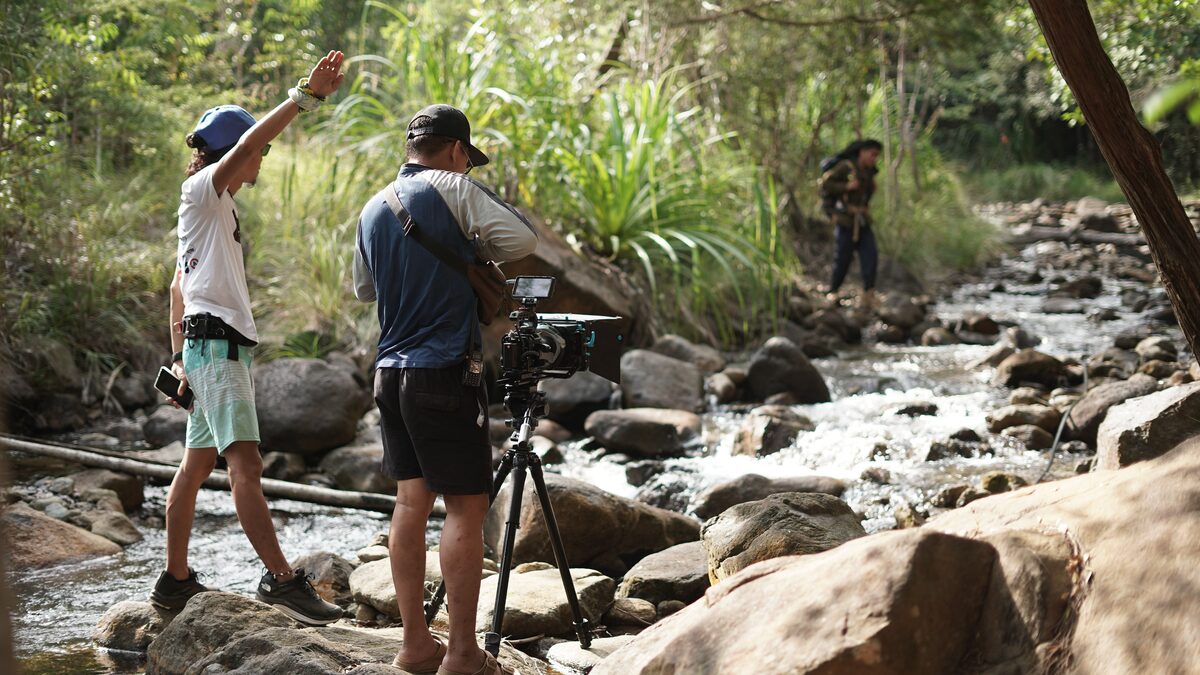
Nature films live in scale and patience. The music has to make a viewer feel the size of a mountain range and the smallness of the creature crossing it, often in the same breath. The classic approach uses sustained strings, soft woodwinds, and slow harmonic movement that never rushes the image. The animals are not on a schedule, and the score should not pretend they are. When you generate music for a wildlife sequence, ask for long phrases, gentle dynamic swells, and space between notes. Density is the enemy here. A sparse arrangement lets the natural sound of wind, water, and wings stay present.
The trap in nature scoring is sentimentality. It is easy to reach for a big emotional string line the moment a lion cub appears, but the best nature films trust the image and hold the music back until it is earned. Try generating two versions of the same cue: one warm and full, one nearly ambient with just a drone and a single instrument. Cut both against your footage and you will usually find the restrained version reads as more honest. When a predator hunts, you can build tension without turning the sequence into an action film. A low pulse, a rising held note, and a sudden drop into silence at the moment of the strike will do more than a wall of percussion.
Nature films also move through weather and season, and your score can track that. A cold, sparse cue for winter and a fuller, warmer palette for spring gives a wildlife film a quiet emotional arc even when the narration stays neutral. Wide landscape establishing shots can carry a broad, open cue that shrinks to something intimate the moment the camera finds a single animal. Generating variations in the same key lets you move between these scales without the film feeling like it changed its mind. The audience should sense the world getting bigger and smaller with the picture, and consistent harmony under changing texture is how you achieve that without them noticing the seams.
Historical documentaries
History asks the score to carry time. A film about the 1930s wants an audience to feel the distance between then and now, and music is the fastest way to fold that distance into a single cue. Period instrumentation helps, but literal period accuracy can work against you. A modern viewer often reads a genuine 1930s recording as quaint rather than serious. The more common approach is to suggest the era with instrument choices, a solo piano, a lone trumpet, a string quartet, while keeping the harmonic language current enough to feel weighty rather than dated.
Historical documentaries usually alternate between archival sequences and present-day interviews or reenactments. Your score can mark that shift. A warmer, more textured cue for the past and a cleaner, more present sound for the now gives the audience an unspoken map of where they are in time. Pacing is its own challenge in historical work, because these films often cover years in a single sequence. When a montage compresses a long stretch of time, the music has to give that compression shape, usually with a steady forward motion that carries the audience through the dates without rushing them. When the film slows to sit with one moment, a treaty signed, a survivor speaking, the score should slow with it and let the moment breathe. Generating a driving version and a still version of your main theme gives you both gears, and because they share the same melodic material the film feels unified even as it speeds up and slows down. When you generate these cues, keep them in the same key or a related one so the film feels like a whole rather than a set of separate moods stitched together. For heavy subjects, such as war, loss, or injustice, resist the urge to score grief loudly. A single cello line over a photograph of the dead says more than a full orchestra. The audience already feels the weight. The music's job is to give that feeling somewhere to rest, not to instruct it.
True crime and tension
True crime lives on withheld information. The whole form is built on the gap between what the audience knows and what they are about to learn, and the score's job is to hold that gap open without cheapening the real harm at its center. This is the genre where music most often goes wrong, because tension is easy to fake and easy to overdo. A throbbing synth bass and a ticking clock will manufacture dread, but if you use them over every scene, the audience stops feeling anything by episode two.
The better path is contrast. Score the ordinary moments as ordinary, even pleasant, so the dark turns actually turn. Generate a set of textures rather than melodies: a low drone, a metallic scrape, a single piano note repeating with too much space around it. These read as unease without telling the viewer exactly what to fear. Save your fuller, more melodic cues for the human cost, the family, the victim remembered as a person, so the film keeps a moral center instead of treating a death as a plot device. When you build tension cues, give yourself a version that resolves and a version that does not. Ending an episode on an unresolved chord leaves the audience leaning forward. Ending on resolution tells them a chapter has closed.
Personal and character-driven
Some documentaries are portraits. One person, one family, one small world examined closely. Here the score follows a face rather than an event, and intimacy is everything. Big arrangements crowd out the subject. What works is small: a piano, a guitar, a soft synth pad, an instrument that sounds like it could be sitting in the room. The music should feel like it belongs to the person on screen, not to the filmmaker commenting from outside.
A useful technique in character work is the theme that grows. Generate a simple motif for your subject early in the film, then create fuller variations of it for later moments as you come to understand them. The audience will not consciously notice the connection, but they will feel the film deepening as the theme fills out. Because these subjects are real people, tone matters enormously. Score a struggling person with pity and the film condescends. Score them with dignity and it lifts. When you write the prompt for a character cue, think less about genre and more about how you want the audience to regard this person, then choose instrumentation and tempo that serve that regard.
Corporate and explainer docs
Brand films, product stories, internal explainers, and nonprofit spots are documentaries too, even when nobody calls them that. They have a different job. The music has to feel modern and confident without demanding attention, because the point is the message, not the mood. Light rhythmic beds, soft electronic pulses, and clean acoustic textures tend to work because they move the film forward without editorializing. The music should feel like momentum, a sense that the story is going somewhere useful.
The common mistake in this category is generic energy. A track that could sell anything sells nothing memorably. If the film is about a company that makes handmade furniture, the score can borrow warmth and a human touch from acoustic instruments rather than defaulting to the same bright corporate synth every explainer uses. If it is a nonprofit telling a hard story, the music has to stay honest even inside a persuasive frame. AI generation helps here because you can quickly produce several tonal directions and test which one fits the brand's actual character rather than the category's default. For pieces that need to loop under a long stretch of narration or b-roll, generate a longer bed and download a clean version you can trim to length without an audible seam.
Underscoring interviews without distracting
Almost every documentary leans on people talking. Interviews are where the information lives, and scoring under a talking head is one of the most delicate jobs in the whole form. Music that is too active competes with the words. Music that is too absent leaves the cut feeling dry and makes every edit point obvious. The goal is a bed that supports the voice without ever pulling focus from it.
Practically, that means a few things. Keep the frequency range clear of the speaking voice, which mostly sits in the midrange, so favor low drones and high shimmer over busy mid-range melody while someone talks. Keep the rhythm loose or absent, because a strong beat under an interview fights the natural rhythm of speech. And keep the dynamics flat, since a swell in the wrong place will make the audience feel manipulated. When you generate an interview bed, ask specifically for something ambient, slow, and low in the mix. Then, in the edit, duck the music several decibels under the voice and let it rise only in the pauses, when a subject stops to gather themselves. Those small rises, timed to breath and silence, are where an interview score earns its place.
Matching tone to the truth you are telling
Every choice above comes back to one question: does the music tell the same truth the footage tells? A score can quietly lie. Triumphant strings over a story that has not earned triumph will make an audience distrust the film without knowing why. Ironic, detached music over genuine suffering can read as cruel. Because a documentary makes a claim about something real, the score carries an ethical weight that a fiction score does not. You are not just setting a mood. You are telling the audience how to feel about actual events, and they will hold you to it.
A simple discipline helps. Before you settle a cue, watch the scene with the music and ask whether the feeling the music produces matches the feeling you honestly have about the material. If a family is describing a loss and your track makes the moment feel cinematic and grand, the mismatch will show. Generating several options makes this easier, because you can compare an honest cue against a showy one directly instead of arguing with yourself in the abstract. The right choice is often the smaller one. Documentaries rarely suffer from too little music. They suffer from music that insists.
Score your next cut to picture
Describe the mood, the instruments, and the pace you need, then generate a cue built for your footage instead of borrowed from a library. It is free to try.
Open the free downloaderDownloading and organizing your cues
Once you have generated cues you trust, get them out of the browser and into your edit in a clean, organized way. Documentary projects sprawl. A feature cut can carry dozens of music cues across many sequences, and losing track of which version went where costs you hours in the finish. Download each cue you plan to use and name it for its scene and its take, so your project stays legible weeks later when you come back to fix a note the director flagged.
A few habits keep the process calm. Download in the highest quality your workflow supports, because a documentary often goes through color, mix, and delivery passes where quality matters and re-exporting is a nuisance. Keep a small folder of alternate versions for your key scenes, since directors change their minds and having the restrained cut and the fuller cut both on hand saves a regeneration cycle. And label your downloads with the film's working title and a date, so when you archive the project you can find the music again for a trailer, a festival edit, or a re-cut a year later. Music you generate yourself is copyright-safe to use in your own work, though whether you can put a finished film into commercial distribution depends on the plan and terms you created it under, so confirm those before you sell or license the piece.
The larger point is that scoring a documentary with AI is not about replacing a composer's ear. It is about giving that ear more to work with. You still make every meaningful decision: where music enters, where it stops, how loud it sits, whether it tells the truth. The tool just lets you try more of those decisions in an afternoon than a stock library ever allowed. Start with the type of film in front of you, let the type point you toward honest choices, and score the truth the footage is already telling.