 Suno Downloader AI
MP3 vs WAV: the difference and which to use
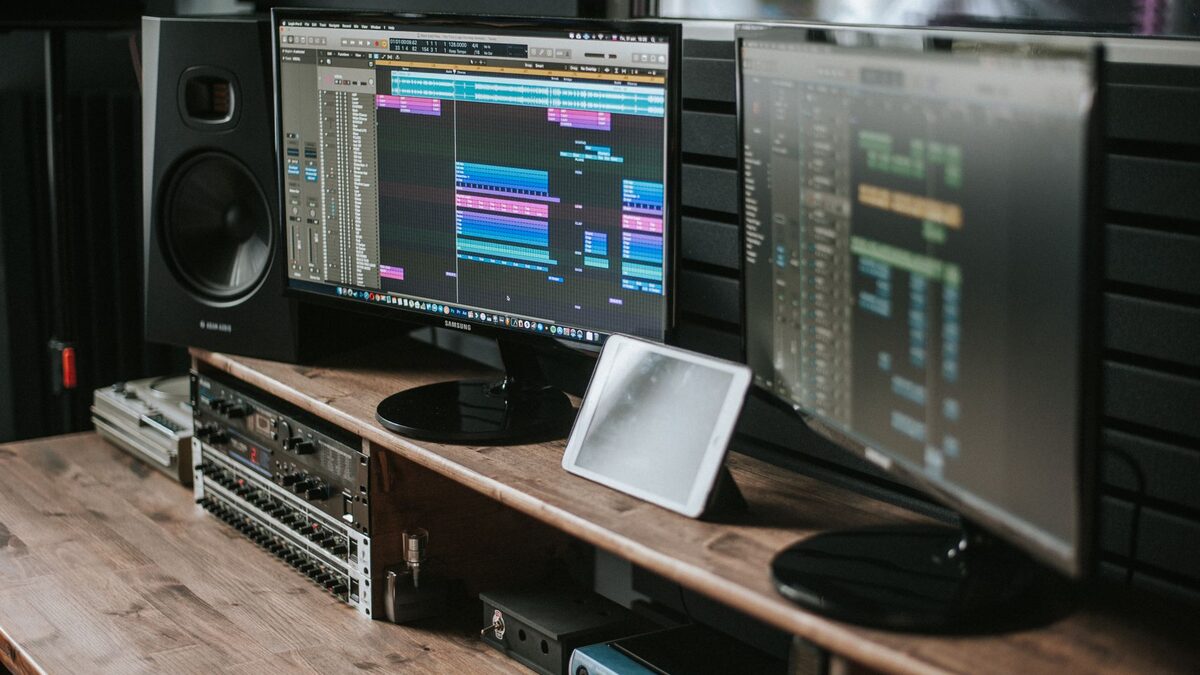
Anyone who downloads or exports music runs into the same choice: MP3 or WAV. The two formats hold the same song but treat it very differently, and picking the wrong one means either a bloated file you did not need or a lossy copy where you wanted the master. This guide explains the real difference between MP3 and WAV, how much quality and size actually separate them, and which is better for the thing you are trying to do.
The short answer
MP3 is a compressed, lossy format that trades a little quality for a much smaller file, and it is the right pick for listening, sharing, and streaming. WAV is uncompressed and lossless, holds the full audio, and is the format for editing, mastering, and archiving. For everyday use, choose MP3. When a track is going into a DAW or you want the original master, choose WAV. The rest of this article is why, and the cases where the choice is less obvious.
What an MP3 is
MP3 is a lossy compressed format, which means it makes the file smaller by removing audio data the format decides you are least likely to hear. The result is roughly a tenth of the original size, and for most listening the loss is hard to notice. That combination of small size and wide support is why MP3 became the format the whole world uses. Every phone, car stereo, browser, and app plays it, and a three minute song fits in a few megabytes, which is what made sharing and streaming practical in the first place.
What a WAV is
WAV is an uncompressed, lossless format that stores the audio in full, sample for sample, with nothing removed. A standard WAV is 16 bit at 44.1 kHz, the same resolution as a CD, and higher resolutions exist for studio work. Because it keeps everything, it is the format engineers reach for when they need the true signal to work with, and it is what you archive when you want a copy that has lost nothing. The cost is size, since a WAV of the same song is many times larger than its MP3.
The real difference in sound
This is where the honest answer disappoints the purists. On normal gear, at a normal volume, most people cannot tell a good MP3 from a WAV in a fair test. A 320 kbps MP3, the highest common bitrate, throws away data in a way that is genuinely hard to hear on earbuds or a phone speaker. The gap opens up in specific conditions: a quiet studio, good monitors or headphones, and a trained ear listening for the treble detail and the space around instruments that heavy compression can smear. It also opens up the moment you start editing, because processing a lossy file exaggerates the parts that were thrown away. So the difference in mp3 vs wav quality is small for listening and large for working.
How MP3 compression works
It helps to know what MP3 actually removes, since it is not random. The format uses a model of human hearing to drop sounds you are unlikely to notice, such as a quiet detail masked by a louder one right beside it, or frequencies at the very edges of what most people hear. What is left is packed into a much smaller file. This is why a good MP3 holds up, because the data removed was chosen to be the least audible rather than simply the last in line. It is also why low bitrate files start to suffer, since once you remove enough, you begin cutting into sound you can hear.
Bitrate: why 320 kbps matters
Not every MP3 is equal, and the bitrate is the reason. Bitrate is how much data the file uses per second, measured in kbps, and it sets how much detail survives compression. A 128 kbps MP3 is small but audibly rough on good gear, with smeared cymbals and a thin top end. A 320 kbps MP3, the highest standard rate, keeps far more and is the one most people cannot tell from a WAV. When you download or export an MP3, aim for 320 kbps if the option exists, since it is the point where the file stays small and the quality stays high.
WAV sample rate and bit depth
WAV files carry two numbers worth understanding: the sample rate and the bit depth. Sample rate, in kHz, is how many times per second the audio is measured, and 44.1 kHz is the CD standard that covers the full range of human hearing. Bit depth, in bits, sets the dynamic range between the quietest and loudest sound, and 16 bit is plenty for a finished track. Studios often work at 24 bit and higher sample rates while recording and mixing, because the extra headroom helps during processing, then export down to 16 bit for release. For a downloaded song, a 16 bit, 44.1 kHz WAV is the full quality master.
File size compared
Size is the clearest difference between MP3 and WAV, and it is easy to picture with a single song.
| Format | Compression | Size, 3 minute song | Quality |
|---|---|---|---|
| MP3 | Lossy | about 3 to 5 MB | Very good, some data removed |
| WAV | None, lossless | about 30 to 50 MB | Full original, nothing lost |
The rough rule is that a WAV runs around ten times the size of an MP3 of the same track. On a phone with a large music library, that difference decides whether you fit hundreds of songs or dozens, which is a big reason MP3 stays the default for anything you only want to hear.
When to use MP3
MP3 is the right choice more often than not.
- Listening on a phone, in a car, or through earbuds, where the small size matters and the quality loss does not show.
- Sharing a track over messaging, email, or a chat, where a WAV would be too large to send.
- Building a big playlist or offline library, where size adds up fast.
- Uploading to a platform that re-encodes anyway, so sending a huge WAV gains nothing.
When to use WAV
WAV earns its size in a narrower set of cases.
- Editing, mixing, or mastering in a DAW, where processing needs the full signal.
- Sending a track to a mastering engineer or a collaborator who will work on it.
- Archiving a master you may need again later, so you always have a copy that has lost nothing.
- Preparing a release for a distributor, since many ask for a WAV as the source file.
MP3 vs WAV for streaming and uploads
When you upload music, the platform decides the final format, which changes the calculation. Services like Spotify and YouTube re-encode whatever you send into their own compressed streams, so they ask for a high quality source, usually a WAV, and do the compression themselves. Sending them a low bitrate MP3 means they compress an already compressed file, which stacks the losses and sounds worse. The rule for uploads is to give the platform the best source you have, normally the WAV, and let it make the streaming copy. For listening to something already online, you are hearing their compressed version regardless of the source.
MP3 vs WAV for video and content
Video adds its own wrinkle. If you are dropping a track under a clip in an editor, use the WAV while you work, since editing wants the full signal, and let the final export compress the audio along with the picture. For a quick social clip where you just need a backing track and size matters, an MP3 is fine and keeps the project light. The general idea holds: edit with the best quality you can, and only step down to a compressed file at the very end, or when the size genuinely matters more than the last few percent of quality.
How many songs fit: the storage math
The size gap turns into a real limit on a device. Using rough numbers, a gigabyte holds somewhere around 250 to 300 songs as 320 kbps MP3s, and only 20 to 30 as WAV. Scale that to a phone or a music player and the difference is stark, since a modest amount of storage becomes a deep MP3 library or a shallow WAV one. This is the practical reason to keep MP3s on the device you carry and WAV masters on a computer or in the cloud, so the phone holds the music you listen to and the big files live where space is cheap.
What about FLAC, AAC, and the others
MP3 and WAV are the two you meet most, but they are not the only options. FLAC is lossless like WAV but compressed, so it keeps the full quality at roughly half the size, which makes it a favourite for archiving when storage matters. AAC is a lossy format like MP3 that tends to sound a touch better at the same bitrate, and it is common in the Apple world. ALAC is Apple's lossless format, and OGG is an open lossy one. For most people the MP3 and WAV pair covers everything, but FLAC is worth knowing if you want lossless quality without the full WAV file size.
MP3 vs WAV for Suno downloads
If you are saving a track from Suno, the same logic applies, and the tool lets you pick either. Take the MP3 when you just want to hear the song, put it on your phone, or send it to someone, since it is small and plays anywhere. Take the WAV when the track is a candidate for editing or release, because that is when the uncompressed master matters. A useful habit is to grab the MP3 for listening and, if a song might go further, the WAV as well, since keeping both costs little and saves regret. Our pages on Suno to MP3 and Suno WAV are set up for each.
Converting between MP3 and WAV
One point about converting saves a lot of confusion. Turning a WAV into an MP3 works fine and is how you make a small copy for listening. Going the other way does not restore anything. Converting an MP3 to a WAV gives you a large file that still contains only the data the MP3 kept, so it sounds the same as the MP3 while taking the space of a WAV. The lesson is to keep the WAV as your source and make MP3s from it, never the reverse, and to download the format you actually need from the start rather than converting later.
A short history of the two formats
The two formats come from different eras and needs. WAV arrived in the early 1990s as a simple, uncompressed container, built when storage was small but fidelity mattered for professional work. MP3 followed later that decade with a different goal, which was to shrink audio enough to move it over slow connections and fit it on early portable players. That job made MP3 the format of the download and streaming age, while WAV stayed the working format of studios. Both are still here for the same reasons they started, which is why the choice between them is really a choice between distribution and production.
Common myths about MP3 and WAV
A few beliefs cause more confusion than the formats themselves. One is that WAV always sounds better, when in normal listening the difference is inaudible and the file is simply larger. Another is that converting an MP3 up to a WAV restores lost quality, which it cannot. A third is that a bigger file means better sound, when a huge WAV made from an MP3 sounds exactly like the MP3. The reliable way to think about it is that quality is set the moment audio is first compressed, and no later step adds back detail that was removed.
So which is better
Neither one wins outright, because the question is really which is better mp3 or wav for a given job. For listening, sharing, and storage, MP3 is better, since the quality loss is inaudible in those settings and the small size is a real advantage. For editing, mastering, and archiving, WAV is better, because it holds the full signal your work depends on. Match the format to the task and you never carry a file that is too big or too lossy for what you are doing with it.
Download your Suno track in either format
Paste a Suno link, choose MP3 or WAV, download. Free, no sign up.
Open the free downloader