 Suno Downloader AI
AI music for meditation: make calm tracks to focus and relax
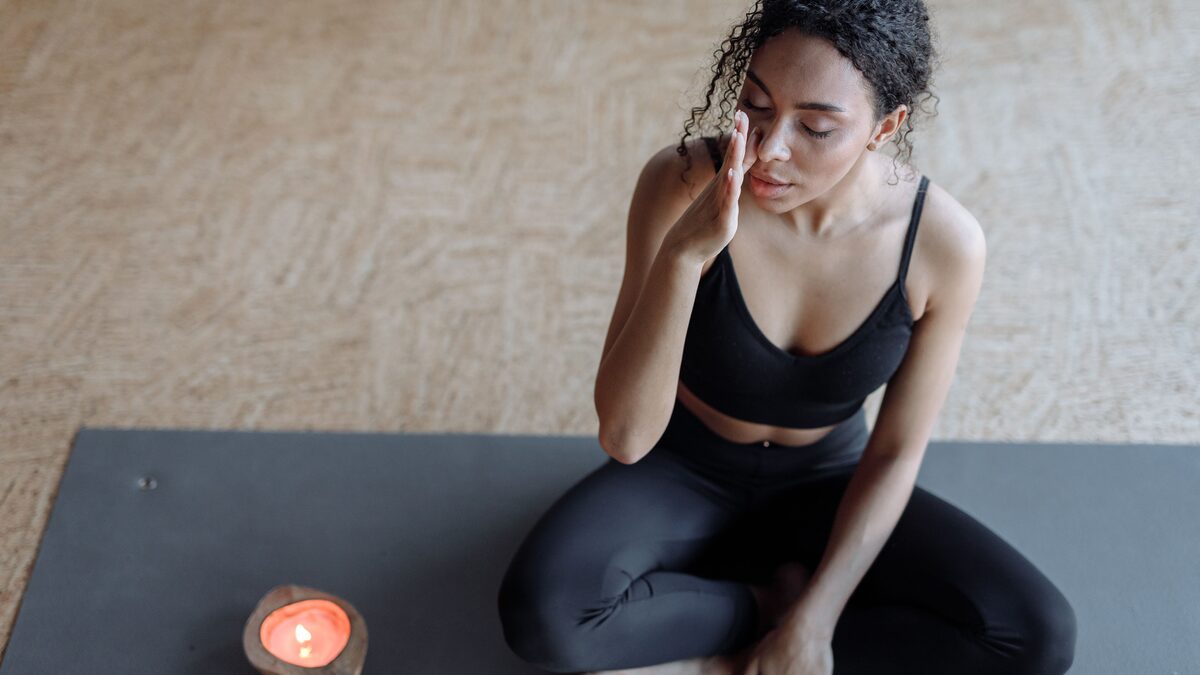
Good meditation music has one job, and it is a strange one: to be barely noticed. The moment a track pulls your attention toward itself, it stops helping. A clever chord change, a sudden swell, a melody you start to hum along to, all of these are small interruptions. They tug you out of your breath and back into listening. So the goal here is not to make music that impresses anyone. The goal is to make sound that holds a soft, steady space and then gets out of the way.
This runs against most of what we know about writing songs. Usually you want contrast, tension, a hook, a payoff. For meditation you want the opposite. You want sameness that never becomes boring, warmth without drama, and movement so slow you can barely tell it is moving at all. AI tools like Suno can do this well, but only if you ask for restraint on purpose. Left to guess, they tend to add. Your work is to keep taking things away until only the useful part is left.
Choose a style that already sits still
Start by picking a style that is naturally quiet. Some genres are built around motion and beat, and fighting that is more trouble than it is worth. Others are already close to stillness, and those are the ones you want. You are looking for wordless, slow, and open. No lyrics, because language makes the mind reach for meaning. No strong pulse, because a beat sets a pace and pulls your breath toward it.
Here are styles that tend to stay out of the way:
- Ambient pads: long, sustained tones that swell and fade with no clear edges. The default choice for a reason.
- Drone: a single held note or chord that barely changes, giving the mind one thing to rest against.
- Tibetan and crystal singing bowls: rich, ringing tones with slow decay and gentle overtones.
- Soft piano with heavy space: single notes with long gaps between them, more silence than sound.
- Nature textures with a musical bed: rain, wind, or a distant stream under a quiet pad.
- Binaural or low-frequency hums: steady tonal beds meant to sit under attention, not on top of it.
Any one of these can carry a full session. What you want to avoid at this stage is stacking too many of them together. One texture, done patiently, beats three textures competing for the same quiet.
It helps to think about frequency as well as instrument. High, bright sounds read to the ear as alert and awake, which is why a shimmering high pad can quietly keep you from settling. Low, warm sounds read as safe and restful. For most meditation you want the weight of the sound to sit low and in the middle, with the very top gently rolled off. That does not mean the track should be dull or muffled. It means the brightness should be soft rather than sharp, present rather than piercing. When you audition a style, notice whether it makes you lean in with alertness or settle back with ease. The second reaction is the one you are after, and it is almost always the lower, warmer option that produces it.
Prompt Suno for stillness, not for a song
The trick to prompting for meditation is to describe an atmosphere and a set of limits, not a piece of music with parts. You are telling the tool what to leave out as much as what to put in. Words like calm, slow, sparse, minimal, sustained, and wordless do real work. So do explicit exclusions. If you do not say no drums, you will often get a soft beat you did not want.
A prompt that tends to land looks something like this: "Slow ambient meditation music, warm sustained synth pads, no drums, no beat, no lyrics, no melody hook, minimal and spacious, gentle and unchanging, soft and low." Notice how much of that is negative space. You are fencing off everything that grabs attention and leaving a wide, calm field in the middle.
Tempo matters even when there is no obvious beat. Ask for something very slow, in the range of 50 to 60 beats per minute or slower, so that any movement in the sound feels unhurried. If the tool offers a mood or descriptor field, lean on words like meditative, peaceful, floating, and still. Avoid anything with energy in it. Uplifting, epic, bright, and driving are all words that will push the result in the wrong direction.
When you get a result that is close but still a little busy, do not start over from scratch. Adjust the prompt by removing one element at a time. Take out an instrument, drop a descriptor, ask for more space. Meditation music is made by subtraction, and the same is true of the prompt that produces it.
It is worth being patient across several tries here, because the tool has a strong pull toward writing a proper song. On an early attempt you might get a lovely piece with a clear tune and a build, which is exactly what you do not want. Rather than accepting it because it sounds good, keep steering. Tell the tool no chord progression, no development, no build, and describe the sound as unchanging or static on purpose. Those words feel strange to type, because they are the opposite of what you would ask for in any other context, but they are precisely what produces a bed you can rest against for twenty minutes. If a generation keeps drifting toward melody no matter what you do, try switching to a pure drone or a single held chord as your starting style, since those give the tool less room to add.
Cut anything that grabs attention
Once you have a draft, listen to it the way a meditator would, with soft focus, not with a critic's ear. Then notice every moment where your attention snaps to the music. A cymbal shimmer, a bass note that arrives too firmly, a chord that resolves in a satisfying way, a little melodic figure that repeats and starts to feel like a tune. Each of those is a place where the track is doing too much.
The most common offenders are melody and dynamics. A melody, even a slow one, invites the mind to follow it and anticipate the next note. That anticipation is the opposite of settling. Dynamics, meaning big changes in volume, act like taps on the shoulder. A pad that swells from quiet to loud and back may sound beautiful on its own, but in a session it becomes a wave that keeps waking you up. Ask for a flatter, more even level.
Reverb is your friend here, up to a point. A generous, long reverb blurs the edges of sounds and makes them feel like weather rather than notes. But too much can turn everything to mush and add a low, cloudy rumble that becomes tiring. Aim for a sense of a large, soft room, not a cave. If the AI gives you something with a hard, dry sound, ask for more space and warmth in the next pass.
Get the length you actually need
Most AI tools hand you a short clip by default, often a couple of minutes. A meditation session is usually longer, anywhere from five minutes to half an hour or more. You have two clean ways to get there, and it is worth understanding both.
The first is to extend the track within the tool. Suno lets you continue a piece so it keeps going in the same style. This gives you a single, flowing recording with no obvious seams, which is ideal for meditation because there is nothing to signal the passage of time. The risk is that the extension drifts, adding a new instrument or a shift in mood partway through. When you extend, keep the same restrained prompt so the continuation stays as plain as the start. Then listen all the way through and cut any spot where it wanders.
The second way is to make a clean loop. If you have thirty or sixty seconds of steady, even sound, you can repeat it to fill any length. The key word is clean. A loop works only if the end of the clip flows back into the beginning with no bump. Pick a section with a constant texture and no obvious start or finish, trim it so both ends sit at the same low, quiet level, and the repeat becomes invisible. A good loop can run for an hour and no one will ever hear the join. This is often the more reliable path for very long sessions, because a loop cannot drift the way an extension can.
Whichever you choose, plan the ending. A meditation track should not stop abruptly. Give it a slow fade of several seconds at the end, so the sound dissolves rather than cuts, and the person listening is eased back rather than dropped.
Match the music to the kind of meditation
Not all meditation wants the same sound. The practice sets the brief, and matching the two makes a real difference.
For breath focus, where attention rests on the in and out of breathing, you want the plainest possible bed. A single drone or one steady pad, no events at all, so nothing competes with the breath. Any change in the music will pull attention off the breath, which is exactly what you are training against. Here, boring is the whole point.
For a body scan, where attention moves slowly through the body, a little more movement is welcome. Very gradual swells, spaced far apart, can loosely mark the passage from one region to the next without anyone consciously noticing. Keep it slow enough that it never feels like a cue. The music breathes with the practice rather than directing it.
For sleep-adjacent practice, like a wind-down or yoga nidra, go darker and lower. Reduce the higher frequencies, which the ear reads as alert and bright, and lean on warm low tones. Long, unbroken drones work beautifully here, and a very slow downward drift in pitch or brightness over many minutes can gently encourage the body toward rest. Nothing sudden, nothing sharp.
For guided meditation, where a voice leads the session, the music has to step back even further. It is a bed under speech, not a feature. Keep it quiet, keep it free of any frequency that clashes with the human voice, and above all keep it flat, because a swell that arrives under an important instruction will bury the words. Think of it as a soft floor for the voice to stand on.
Let silence be part of the track
One thing that separates real meditation music from ordinary calm music is how it uses silence. In most music, silence is a gap to be filled. In meditation music, silence is an ingredient. A soft piano track with long gaps between notes gives the mind room to rest in the space, and the space becomes as important as the sound. Do not be afraid of a track that is mostly quiet with only occasional gentle events. That openness is often more useful than a continuous wash of sound, because it gives attention somewhere to settle rather than something to follow.
When you prompt for this, ask directly for space, sparseness, and long pauses. Words like minimal, spacious, and sparse push the tool toward leaving room. If you get back something dense and continuous, ask for fewer notes and more silence between them. This works especially well with single instruments like piano or bowl, where a struck note can ring out and fade to nothing before the next one arrives. The fading itself becomes a small meditation, a sound you can follow all the way down into quiet. That slow disappearance, repeated gently, is one of the most calming things music can do.
Set the volume so it disappears
Level is part of the composition, not an afterthought. Meditation music should sit just above silence. If you can clearly make out every detail, it is probably too loud. The right level is one where the sound is present but you have to reach slightly to notice it, the way you might notice the hum of a room only when you think about it.
The room and the gear play a part too. On small phone speakers, a lot of the low warmth simply disappears, so a track that felt full on headphones can sound thin and tinny out loud. If you know a session will be played through a phone or a small speaker, listen on that device while you set the level, and do not chase a richness the speaker cannot produce. On good headphones or a proper speaker, the opposite risk appears: the low end can become too present and start to feel heavy. Test your track on whatever you will actually use it on, at the actual volume of a real session, rather than trusting how it sounds while you are working on it up close.
When you produce or export the track, avoid heavy compression and loudness maximizing. Those tools crush the quiet parts up toward the loud parts, which is the opposite of what you want. You want a gentle, even, low signal with plenty of room left underneath. If you are pairing the music with a guided voice, mix the music far below the voice, so the words always win. A safe habit is to set the music level, then turn it down again, because it is almost always still too present on the first try.
Ready to save your meditation track?
Paste your Suno link, choose MP3 or WAV, download. Free, no sign up.
Open the free downloaderDownload it for offline, ad-free sessions
A meditation is not the place for a buffering pause or an ad breaking in halfway through. Streaming a track from a browser or app leaves you at the mercy of your connection and whatever the platform decides to interrupt you with. The fix is simple: get the file onto your device and play it locally. Once your track sounds the way you want, save it with a free downloader, choose MP3 for a small file that plays anywhere or WAV if you want the fullest quality for looping and editing, and keep it on your phone or player.
Having the file also means you can build a small library. A five minute breath track, a twenty minute body scan bed, a long sleep drone, each saved and named so you can reach for the right one without hunting. You can drop them into a playlist, set one to loop for an open-ended sit, or hand a copy to a friend who is starting a practice. None of that is possible with a stream you do not control. Offline, quiet, and yours is the setup a real practice deserves, and it takes only a minute to put in place.
Keep it plain and let it work
If there is one habit to carry away from all of this, it is to trust plainness. Every instinct trained by ordinary music will tell you to add interest, and every one of those additions makes the track slightly worse at its actual job. The most useful meditation music you make will probably feel almost too simple when you listen to it on its own. That is the sign you got it right. Set the tool to restraint, cut until only the calm is left, give it the length and the fade it needs, and then stop. The stillness does the rest.