 Suno Downloader AI
AI music for museums: sound design for exhibitions
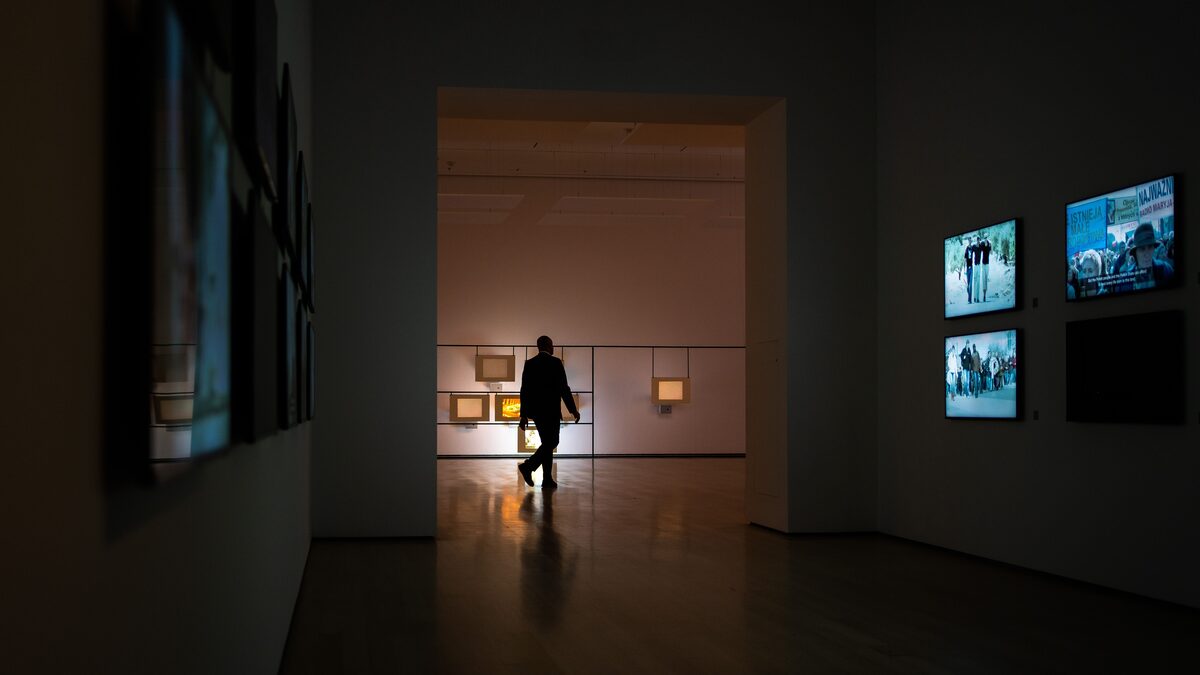
Walk into any well-designed exhibition with your eyes closed and you will still know a great deal about where you are. The room tells you. A high entrance hall rings with reflected sound and makes you slow down and look up. A dim, carpeted gallery swallows noise and pulls your shoulders down and your voice to a whisper. Long before a visitor reads a single label, sound has already told them how to behave, how fast to walk, and how much to feel. Curators have always known this instinctively. What has changed is how easily you can now compose the sound on purpose.
Music in a museum is not a soundtrack in the cinema sense. It is architecture you cannot see. Done well, most visitors never consciously notice it, and yet it governs the pace of the whole visit, the pauses at certain objects, the hush in a memorial room, the quickened step through a bright interactive zone. This guide walks through a museum space by space, the way a designer plans a route, and looks at how AI music can give each part of that route its own considered atmosphere without a large audio budget or a licensing headache.
The entrance and atmosphere
The entrance sets the contract with the visitor. It answers a question they are asking without words. What kind of place is this, and how am I meant to be here? A natural history museum full of families wants an entrance that feels open, curious, and gently energetic. A memorial or a fine art institution wants something that lowers the voice and steadies the breath the moment someone steps inside.
The music here should be broad and slow to change. Think of it as a wash of tone rather than a piece with a beginning and an end. When you generate it, ask for a spacious, atmospheric bed with slow evolving textures, warm sustained tones, and no strong rhythm or melody. The absence of a clear beat is deliberate. A beat tells people to move at a certain speed, and at the entrance you want them to set their own pace as they orient themselves and read the first panel.
Match the register of the sound to the institution. A science center can carry a brighter, more hopeful atmosphere with a hint of wonder. A history museum dealing with difficult subject matter needs something more neutral and grounded, so the tone of the first room does not overpromise or jar against what follows. The entrance is a promise, and the music should promise honestly.
Ambient beds for galleries
Most of a museum is galleries, and most galleries are best served by sound so subtle that a visitor would only notice it if it stopped. The purpose of an ambient bed in a gallery is to soften the acoustic dead space, mask the shuffle and cough of other visitors, and hold a consistent mood across a room without ever demanding attention. This is the hardest kind of music to get right, because its success is measured by its invisibility.
The key qualities are low information and long duration. Ask for a minimal ambient piece with slow drones, faint harmonic movement, and long, smooth transitions, with nothing that repeats in an obvious pattern. Obvious repetition is the failure mode. A four-bar phrase that comes back every twenty seconds becomes maddening to a room attendant who hears it for a seven-hour shift, and eventually to a visitor lingering over a single work. You want something that feels like it is always slowly becoming something else.
Volume discipline matters more than the composition. A gallery bed should sit just above the threshold of hearing, present enough to shape the room but quiet enough that two people can talk over it in a normal voice. It is common to generate a piece that sounds perfect in headphones and then find it far too busy once it fills a real room over speakers. When in doubt, ask for something simpler and quieter than instinct suggests, and let the space do the rest.
Consider the objects the bed sits behind, too. A gallery of loud, colorful contemporary work can carry a fractionally warmer and more present sound, because the art itself sets a confident tone. A room of fragile manuscripts or fine drawings asks for something almost weightless, a bed that supports the concentration those objects require rather than intruding on it. The music is in service of the looking, and the more demanding the looking, the more the sound should recede. A useful test is to stand in front of the most important object in the room and ask whether the music helps you attend to it or pulls a thread of your attention away. If it pulls, simplify.
Immersive and themed exhibits
Immersive exhibits invert the usual rule. Here the sound is meant to be noticed, because the whole point is to transport the visitor into a place, a period, or a mood. A recreated Victorian street, a deep-sea gallery, a room built around a single dramatic artifact, all of these ask the music to carry emotional and even narrative weight.
This is where you can be specific and evocative in your prompts. For a maritime hall, ask for a slow, oceanic piece with deep swells, distant creaking textures, and a sense of vast cold water. For a space exhibit, ask for something weightless and wondrous, with shimmering synths and a feeling of drifting. For a room about conflict or loss, ask for a restrained, solemn piece with a single mournful instrument and long silences. The more precisely the music names the world of the exhibit, the more completely a visitor steps inside it.
Themed exhibits often benefit from a piece that has a gentle arc rather than a flat loop, because visitors tend to move through them along a set path and spend a predictable amount of time inside. If you know the average walkthrough takes four minutes, a piece that slowly builds and settles across roughly that span can guide the emotional journey from the door to the exit. Match the length of the emotional shape to the length of the physical path, and the exhibit will feel composed rather than simply decorated.
Interactive and children's areas
Interactive zones and children's areas run on different rules from the rest of the building, and the sound has to acknowledge that. These are places for energy, play, and noise. A hushed ambient drone would feel wrong next to a wall of buttons and a crowd of excited eight-year-olds. Here a light, bright, gently rhythmic piece supports the mood instead of fighting it.
Ask for something warm and playful, with soft mallet instruments, a light bounce, and a friendly, curious feel, but keep it loopable and unobtrusive enough to survive repetition. The challenge in a children's area is that the same track may run all day at meaningful volume, so anything grating or too catchy becomes a problem for the staff who work there. Aim for cheerful but calm, the audio equivalent of a well-lit, well-organized play space rather than an arcade.
There is also an acoustic argument for gentle sound in these zones. Interactive areas generate a lot of human noise, and a soft musical bed can take the edge off the chaos, giving the room a floor of pleasant sound that makes the overall volume feel intentional rather than overwhelming. Parents relax a little, and a relaxed parent stays longer. The music is doing quiet crowd management as much as it is setting a mood.
Keep in mind that these areas often sit next to quieter galleries, and sound does not respect the line on the floor plan where one zone ends and another begins. A bright, bouncy track in a children's corner can leak into the hushed room beside it and undo the calm you built there. Plan the volume and the speaker placement so the playful sound stays contained, and where two very different moods meet, treat the boundary between them as a design problem in its own right rather than an accident of where the walls happen to fall.
Keeping it subtle and loopable
Across every space, two technical qualities separate museum music that works from museum music that irritates. The first is subtlety, which is mostly a question of restraint in both the composition and the volume. The second is loopability, because these pieces play for hours and a seam that clicks or a phrase that repeats too obviously will wear a hole in the visitor experience by mid-afternoon.
When you generate a piece intended to loop, favor long, slowly changing textures over anything with a clear hook. The less memorable a single moment is, the better it loops, because there is no landmark for the ear to latch onto and count. After you generate a candidate, listen to it on repeat for several minutes, not just once. A track can sound lovely on first play and reveal an annoying tic on the fourth loop, and the fourth loop is closer to what a visitor and a room attendant will actually hear.
Pay attention to the start and end of the file. A clean loop needs the ending to flow naturally back into the beginning without a jarring jump in volume or texture. Choosing or generating pieces that fade gently at both ends, or that begin and end in a similar quiet state, makes a smooth, invisible loop far easier to achieve in whatever playback system the gallery uses.
Matching the theme
A museum is a collection of arguments about its subject, and the music should agree with those arguments rather than wander off on its own. The tone of every piece should be checked against the intellectual and emotional content of the space it fills. A gallery of delicate botanical illustration and a gallery of wartime photographs sit in the same building, but a single generic ambient track underneath both would flatten the difference the curators worked to create.
The practical method is to write a short brief for each space before you generate anything, a sentence or two naming the feeling and the period the room is meant to evoke. Feed the mood words from that brief directly into your prompt. If the brief for a room says "fragile, patient, close observation," those words will steer the music toward the right texture far better than a genre label ever could. Let the curatorial intent, not a musical convention, drive the sound.
Consistency across the route also matters. While each space deserves its own atmosphere, the whole visit should feel like one considered experience, not a jarring series of unrelated moods. Keeping a loose palette in mind, a shared instrument or a common quality of warmth or coolness that runs through the building, ties the individual pieces into a single coherent sound world that visitors feel even if they never name it.
Licensing for a public institution
For a museum, the licensing conversation is not an afterthought, it is a governance question. A public institution plays its sound to thousands of people, often for years, sometimes across multiple sites, and it needs to be certain of its rights to do so. This is a strong reason to compose original AI music rather than relying on commercial recordings, because it removes the ongoing exposure that comes with playing licensed songs in a public space.
Two points deserve the attention of whoever signs off on the exhibition. First, whether the institution may use a generated track in this public, and effectively commercial, context depends on the plan and terms under which it was created. A museum should confirm that its account tier grants the rights it needs for long-running public playback before the exhibition opens, rather than discovering a limitation later. Reading the terms carefully is exactly the kind of diligence a public body is expected to do. Second, keep clean internal records of what was generated for each space, including the prompts and the source, so the provenance of every piece in the building is documented and defensible if anyone ever asks.
Compose the room, then keep the file
Generate the atmosphere each space needs, then download a clean copy for your playback system and your archive.
Open the free downloaderDownloading and installing the sound
Once a piece is right for its space, you need it as a real file, not a link. Exhibition playback runs on local media players, gallery hardware, and building systems that expect an audio file they can loop reliably without depending on a streaming connection. Generate the track, then download the audio so you hold a clean copy for installation and for your institution's archive. The free downloader on the home page gives you that file directly.
A sensible process looks like this. Write the brief for each space. Generate two or three candidates per space and audition each on repeat for several minutes to test how it wears over time. Download the chosen files, label them clearly by gallery, and keep the prompts alongside them in your records. Test the loops on the actual gallery hardware at true installation volume, because a track behaves differently in a large room over ceiling speakers than it does in a design office over a monitor. Adjust levels room by room until the whole route feels balanced.
The reward for this care is a building that guides its visitors gently and invisibly, that holds the right mood in every room, and that the institution owns and controls without a licensing cloud hanging over it. Sound is one of the most powerful tools a curator has and one of the most overlooked. Composed with intent, space by space, it becomes part of the exhibition rather than background noise, and the whole visit feels considered from the first step through the door to the last.