 Suno Downloader AI
AI music for spin class: build a ride that pushes riders
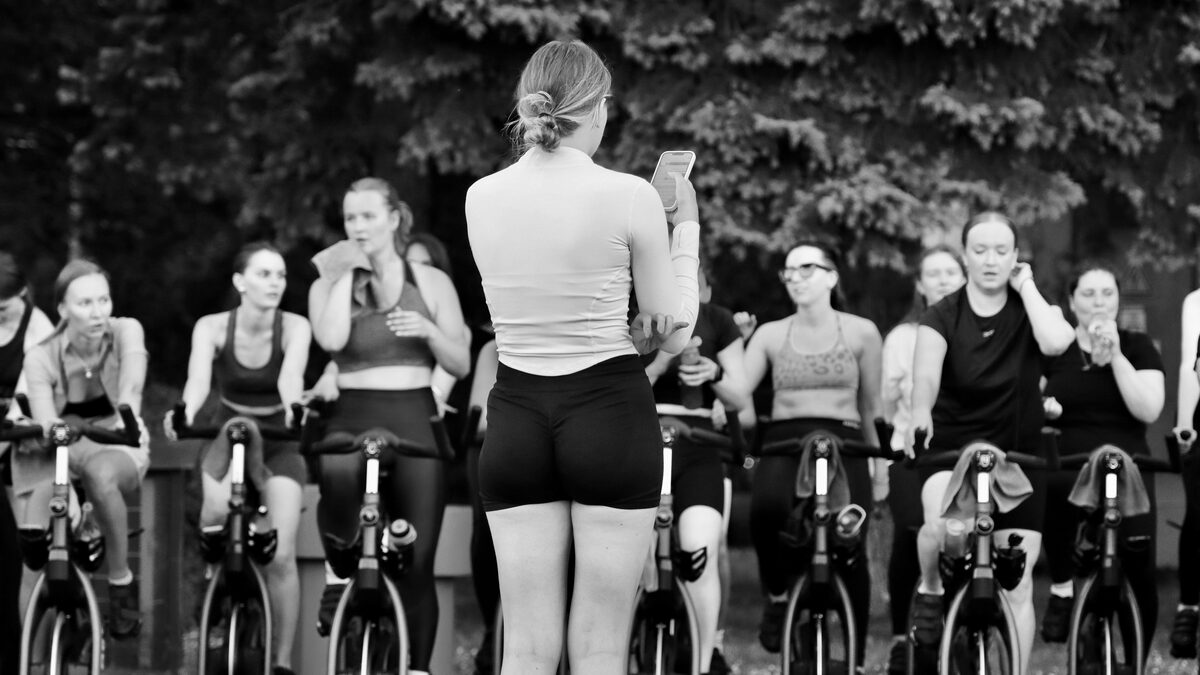
A spin class lives and dies on its music. The right track at the right moment is what gets a tired rider out of the saddle for one more climb, and the wrong track kills the room's energy dead. If you teach spin, you already know this, and you probably also know the headache of licensing. Playing commercial music in a paid class is a legal gray zone that studios pay real money to cover. Making your own music with an AI tool like Suno sidesteps that problem entirely and gives you tracks built to the exact tempo and feel each part of your ride needs.
This guide is organized the way you actually coach a class: by phase. A good ride is a story with a shape, energy that climbs and drops on purpose, and your music has to follow that shape. Let's walk through each phase, and for every one you get the target feel, a BPM range, and a Suno prompt you can adapt. Here is the full arc we will build toward:
- Warm-up, steady and moderate, easing the legs and lungs awake.
- Flat road, a driving groove at a comfortable working pace.
- Climbs, heavy and slower, a grinding effort out of the saddle.
- Sprints and intervals, fast and high energy, all-out bursts.
- Recovery, easing back between the hard efforts.
- Cool-down, slow and calm, bringing everyone back to earth.
Build a track for each of these and you have a complete 45 minute ride. Let's take them one at a time.
Warm-up: steady and moderate
The warm-up sets the tone and gets legs turning without shocking anyone. You want a target feel that is positive and rolling, energizing but not aggressive. Riders are still finding their cadence, clipping in, adjusting resistance. The music should tell them the ride has started and something good is coming, without demanding a hard effort yet.
Target BPM for a warm-up sits around 120 to 128. That maps to a relaxed, steady pedal stroke that raises the heart rate gradually. Avoid anything slower, which drags, or anything faster, which pushes people too hard before their legs are ready.
A Suno prompt to try: "Upbeat house track, 124 BPM, warm and positive, steady four on the floor beat, bright synths, no big drops, motivating gym warm-up energy." Ask for a clean, consistent groove without dramatic breakdowns. You want momentum that builds gently, not a track that peaks and crashes in the first three minutes.
Flat road: a driving groove
The flat road is the working body of the ride. Riders are seated, holding a strong steady cadence, settling into effort. This is where you want a driving groove that carries them along and makes the pedaling feel good rather than like work. The feel is confident and propulsive, the kind of track that keeps legs moving on autopilot.
Target BPM here is roughly 128 to 135. That is a solid working cadence for seated flat riding, fast enough to keep the effort honest but sustainable for several minutes at a stretch. This is the tempo range where a lot of good dance and house music naturally sits, so the AI has plenty to draw on.
Prompt idea: "Driving house groove, 132 BPM, strong steady bassline, punchy kick, confident and relentless, minimal vocals, built for cardio momentum." The key word is relentless. You do not want big dynamic swings here. You want a track that locks into a pocket and stays there, because the whole point of the flat is holding a steady effort.
Climbs: heavy and slower
Climbs are where the ride gets hard, and the music has to sell the grind. Riders crank up resistance and often come out of the saddle, and their cadence drops because each pedal stroke is heavier. This is the counterintuitive part of spin music: for a harder effort, you want slower, heavier music, not faster. A grinding, weighty track matches the slow powerful stomp of climbing out of the saddle.
Target BPM for climbs drops to around 60 to 80, or you can use a track in the 120 to 128 range and coach riders to pedal on the half beat, one stroke every two beats. The feel you are after is heavy, powerful, and a little dark. Think of a slow, thick, driving track that feels like effort.
Prompt to try: "Heavy slow rock anthem, 72 BPM, thick distorted guitars, pounding drums, powerful and gritty, building intensity, epic climbing energy." Rock and heavier electronic styles both work well for climbs because they carry weight. Ask for a build so the climb feels like it is getting harder as it goes, which mirrors what riders' legs are actually feeling.
Sprints and intervals: fast and high energy
Now the ride explodes. Sprints and intervals are short, brutal, all-out bursts where riders spin their legs as fast as they can for thirty seconds or a minute at a time. The music has to be fast, loud, and full of adrenaline. This is the highest energy point of the class, and the track should feel like it is chasing the riders.
Target BPM climbs to 135 to 150 or higher. That is a fast, frantic cadence that pushes legs to their limit. For interval work you can use a track with clear energy peaks and dips so the loud sections signal the sprint and the quieter sections signal recovery, letting the music itself cue the work.
Prompt idea: "High energy electro banger, 145 BPM, aggressive synths, fast driving beat, big builds and drops, adrenaline fueled, festival main stage intensity." For structured intervals, ask the AI for a track with clear loud and quiet sections at regular intervals, so you can tell riders to sprint on the drop and recover on the breakdown. The music does your counting for you.
A word of caution about sprint tracks: use them sparingly. Their whole power comes from contrast, from the fact that the room suddenly lifts when the banger drops. If you stack three of these back to back, riders burn out and the effect flattens. One or two well placed sprint tracks in a 45 minute ride land harder than five. Save them for the moments you really want to spike the effort, and let the flats and climbs carry the bulk of the class. The sprint should feel like an event, not the baseline.
Recovery: easing back
Between hard efforts, riders need to catch their breath, and the music needs to let them. Recovery tracks sit between the intense work and give the legs and lungs a moment to reset before the next climb or sprint. The feel is a step down in intensity without stopping the momentum entirely. You are lowering the effort, not ending the ride.
Target BPM for recovery is around 100 to 115. That is slow enough to bring the heart rate down but still moving, so riders keep their legs turning at an easy pace rather than coasting to a halt. A track that is calmer but still has a pulse works best here.
Prompt to try: "Chilled melodic house, 108 BPM, smooth pads, gentle groove, still moving but relaxed, breathing room, light and airy." Keep it pleasant and unremarkable in the best way. Recovery music should feel like relief, a soft landing between the parts of the ride that hurt.
Cool-down: bringing everyone back
The cool-down closes the class. The hard work is done, resistance comes off, cadence slows, and riders bring their heart rate back to normal. The music should be genuinely calm now, slow and warm, the sound of a good effort finishing well. This is also often where a stretch happens, so the track needs to be gentle enough to breathe and reflect over.
Target BPM drops to 60 to 90, slow and unhurried. The feel is warm, satisfied, and a little uplifting. You want riders to leave feeling good about what they just did, so a track with a hopeful, easy quality lands better than something flat or sad.
Prompt idea: "Ambient downtempo track, 70 BPM, warm pads, soft piano, gentle and uplifting, cool-down and stretch, peaceful resolution." Ask for no sudden dynamics, nothing that jolts. The cool-down is a slow exhale, and the music should feel like one.
Matching BPM to cadence
The whole system above rests on one idea: BPM maps to cadence. Beats per minute is how many beats happen in a minute, and cadence, in cycling terms revolutions per minute or RPM, is how many times the pedals go around. When a track is 130 BPM and a rider pushes one pedal stroke per beat, they are riding at 130 RPM, which is fast. Pedal on every other beat and they are at 65 RPM, a heavy climbing cadence.
This is why the same track can serve two purposes. A 128 BPM song works as a flat road at full cadence and as a climb at half cadence. Knowing this gives you flexibility and lets you coach riders to feel the beat rather than stare at a screen. When you cue "find the beat," you are syncing their legs to the music, and the effort takes care of itself.
When you generate tracks in Suno, put the BPM directly in the prompt. AI music tools respond well to a specific tempo, and getting it close to your target means less guesswork later. It will not always land exactly on the number, so listen and check. If a track feels off for its phase, regenerate with the BPM adjusted up or down until the pedal stroke lines up with the beat the way you want.
A quick way to verify tempo is to ride to the track yourself before class. Clip in, pedal one stroke per beat, and see whether the cadence feels like what you want that phase to be. If a flat road track has your legs spinning frantically, it is too fast for a seated effort and belongs in the sprint pile instead. If a supposed sprint track feels lazy, bump the BPM and regenerate. Your own legs are a better judge than the number, because what matters is how the effort feels in the saddle, not what the prompt claimed. Testing this way also catches tracks where the beat is unclear or wanders, which are useless for a class no matter what tempo they are labeled, since riders cannot lock onto a beat they cannot find.
Building a full 45-minute ride
Now assemble the phases into a class. A standard 45 minute ride might run something like this: five minutes of warm-up, then alternating blocks of flat road, climbs, and sprints for about thirty-five minutes with short recovery tracks in between, then five minutes of cool-down. The exact structure is yours, but the principle is that energy should rise and fall on purpose, not stay flat and not climb in a single straight line.
The mistake to avoid is a playlist that is all peaks. If every track is a 145 BPM banger, riders redline early and have nothing left, and the sprints stop feeling special because everything already feels like a sprint. Contrast is what makes the hard parts hit. A climb feels harder after a groovy flat, and a sprint feels explosive after a recovery. Build the valleys so the peaks mean something.
Sketch the ride on paper first. Write out your blocks in order with a target BPM next to each, then generate a track to fit each slot. Making your own music means you are never stuck searching for a song that happens to be the right tempo. You describe the phase, name the BPM, and the AI builds a track to order. Give each one a listen in the context of the tracks around it, because a song that sounds great alone can still clash with what comes before or after it.
Pay attention to the transitions between blocks as much as the blocks themselves. The handoff from a driving flat into a heavy climb, or from a brutal sprint into a recovery, is where a class either flows or stumbles. You want the energy change to feel intentional, like you planned it, not like the playlist lurched. If two neighboring tracks jar against each other, swap the order, regenerate one to sit closer in feel, or add a short bridge track between them. A ride that flows keeps riders in the zone, and a ride that keeps snagging on awkward transitions keeps yanking them out of it, which is exactly what you are trying to avoid when you build the set yourself.
Ready to save your ride playlist?
Paste your Suno link, choose MP3 or WAV, download. Free, no sign up.
Open the free downloaderKeeping tracks legal for a paid class
This is the reason a lot of instructors come to AI music in the first place. Playing commercial pop and dance tracks in a paid fitness class means public performance, and that requires licensing that most independent instructors and small studios cannot easily afford or navigate. Using popular music without it puts you and the studio at real legal risk.
Music you make yourself with an AI tool changes that equation, because you are not using someone else's copyrighted recording. You are generating original tracks. This is a large part of why AI music has caught on for spin, group fitness, and studio use: you get music built to your exact spec without the licensing headache that comes with commercial songs. Always check the specific terms of the tool you use so you understand what your plan allows for commercial and public settings, since terms differ between services and between free and paid tiers, but the core advantage is that the music is yours to build a class around.
The practical upside is freedom. You can build a signature sound for your class, tweak a track that is almost right, and never worry that the one song your riders love will get your studio a letter. You control the whole soundtrack.
Downloading for offline studio play
Once your ride is built, get the tracks off the platform and onto the device you teach from. A studio is the last place you want to depend on streaming. Wifi drops, apps stall, and a buffering track in the middle of a sprint block is a disaster you can prevent completely by having the files stored locally.
Use a free downloader to save each Suno track as an MP3 or WAV. MP3 is the practical choice for most studios: smaller files, plays through any sound system, and the quality is more than enough for a room with a strong speaker and forty riders. WAV gives you the fullest audio if your studio has a high end system and you want maximum fidelity, but the files are much larger and the difference is hard to hear over the noise of a class.
Load the downloaded tracks into a local playlist in your ride order, and here is the important part: test it. Play the whole set through the studio's actual system with the wifi off before your first class, so you know the order is right, the volumes are matched between tracks, and there are no gaps or surprises. Matching volume between tracks matters more than people expect, because a quiet climb after a loud sprint can feel like the energy dropped out when really the mix just dipped.
Keep your finished rides organized once you have a few. Name each playlist by its shape or intensity, a hill-heavy ride, a sprint-focused ride, a shorter express class, so you can pull up the right one for the right day without rebuilding it. Over a few weeks of teaching you will accumulate a library of tracks you trust, and assembling a fresh ride becomes a matter of rearranging pieces you already know work rather than starting from a blank slate. That is the quiet long-term benefit of making your own music: every track you generate and download is yours to reuse forever.
With the files local and tested, your class runs no matter what the studio's internet is doing. Press play, coach your riders through the arc you built, and let the music do the pushing. That is the payoff of building your own ride: total control over every beat, legally clear, and reliable from the first warm-up track to the last note of the cool-down.