 Suno Downloader AI
Make money with AI music: six realistic paths

Search for how to make money with AI music and you will drown in screenshots of dashboards, promises of passive income, and confident young men pointing at numbers. Almost all of it is nonsense, or at least wildly incomplete. AI tools have genuinely lowered the barrier to producing finished music, and that does open real doors. But making music and making money from music are two very different problems, and the second one has not gotten much easier at all.
So let us cut through it. This is an honest inventory of the ways people actually earn from AI music, with the effort and the limits spelled out for each one. None of these is free money. Every one is a real business that takes work, patience, and usually a good while before it pays. Read this as a realistic map, not a lottery ticket.
One thing up front that applies to everything below. If you plan to earn from tracks you generate, you need the right plan and to read the terms of whatever tool you use. Many AI music services only grant commercial rights on paid tiers, and the details of what you can sell, and how, vary. Sort that out before you build anything on top of your music, because the whole thing rests on actually owning the right to sell what you make.
1. Streaming royalties
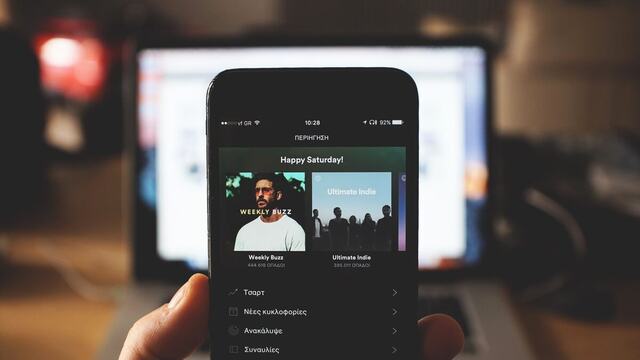
How it works. You make tracks, distribute them to Spotify, Apple Music, and the rest through a distributor, and earn a small amount every time someone streams a song. It is the most obvious path and the one most people try first. You can build up a catalog of tracks in niches that get steady background listening, like lo-fi, ambient, focus music, or sleep sounds, and let them accumulate plays over time.
The honest caveat. Per-stream payouts are tiny, fractions of a cent, so this only adds up with either a lot of streams or a very large catalog, usually both. Getting streams at all is the hard part, because playlists and discovery are fiercely competitive and a track nobody finds earns nothing. Platforms are also increasingly attentive to AI-generated uploads and to anything that looks like stream manipulation, so you have to play it straight and build genuine listenership. Streaming is a slow, long-tail game, not a quick win.
If you do go this route, think in terms of years and catalog rather than a single hit. The people who earn from streaming background music usually have hundreds of tracks working quietly in the same niche, each one contributing a trickle that adds up over time. That is a real commitment of effort, and it only pays if the music is good enough to hold a listener and correctly placed where those listeners already are. Treat your first fifty tracks as learning, not earning, and you will have a healthier picture of what this actually takes.
2. Sync and licensing
How it works. Sync means placing your music into video, a YouTube channel, an ad, a podcast, an indie game, a small film. Creators and businesses constantly need background music they are legally allowed to use, and they will pay for a license or buy a track outright. You can license directly to creators you know, or list your music on stock and production music libraries that handle the marketplace for you.
The honest caveat. This is one of the more realistic paths, but it lives or dies on quality and fit. Buyers want music that is polished, correctly tagged, and genuinely useful for their project, and they have thousands of options. You also need airtight rights to license the music, which loops back to your tool's plan and terms, since you cannot sell a license to something you do not fully control. Many libraries are also selective about AI-generated material or require you to disclose it, so check each one's policy before you upload. A track submitted to the wrong library, or without the disclosure a library requires, can get your whole account pulled, so read the fine print rather than skimming it.
3. Selling beats and tracks
How it works. You produce instrumentals, beats, or full tracks and sell them to other artists, rappers, singers, and content makers who want something to build on. Beat marketplaces exist for exactly this, and you can sell the same beat as a limited lease to several buyers or as an exclusive to one for a higher price. AI speeds up producing a lot of varied material, which is useful when volume helps you get noticed.
The honest caveat. The beat market is crowded and price-sensitive, with countless producers competing and buyers who can find endless free options. Standing out takes a recognizable sound, consistent output, and usually a real effort at promotion and relationships. Exclusive sales pay more but are rare. And again, you can only legally sell what you have the rights to, so confirm your plan permits selling the tracks before you list a single one. Expect this to reward persistence and marketing at least as much as the music itself.
The producers who do well here tend to treat it as a brand, not a listing. They post consistently, engage with the artists they want to sell to, and build a catalog with a recognizable identity so a buyer knows what they are getting. That is a real marketing effort layered on top of the music, and it is usually the deciding factor between a page nobody visits and one that makes steady sales. If promotion drains you, this may not be your path, because the beats themselves are only half the job.
4. Background music for creators and businesses
How it works. Beyond one-off licensing, there is steady demand for functional background music. A cafe wants a calm in-store playlist. A gym wants energy. A YouTuber wants a consistent musical identity across their videos. A meditation app wants a library of calm tracks. You can serve these needs by producing music to a brief, either selling packs or working on an ongoing basis with clients who need a reliable supply.
The honest caveat. This is real work with real clients, which means it comes with real client management, revisions, deadlines, and the effort of finding those clients in the first place. It is a service business more than a passive one, and it pays roughly like a service business. The upside is that it can be steadier and more predictable than chasing streams, because a happy client who needs music regularly is worth far more than a track drifting alone on a streaming platform. As always, confirm your commercial rights cover this kind of use before you take money for it.
The relationship is the real asset in this path. Landing the first client is the hard part, but once someone trusts you to deliver music that fits their brand, they tend to come back rather than start the search over. That turns one-off jobs into something closer to recurring income, and it means your reputation and reliability matter as much as your musical range. Deliver on time, take feedback gracefully, and make the client's life easier, and this can quietly become the most dependable line on this list.
5. Content and a following
How it works. Instead of selling the music directly, you build an audience around it. A YouTube channel of study music, a TikTok presence, a Twitch stream, a niche you own. The music is the draw, and you earn through the platform's ad revenue, memberships, tips, sponsorships, and the audience you develop over time. Some of the more sustainable AI music earners are really content creators whose product happens to be music.
The honest caveat. Building an audience is genuinely hard and genuinely slow, and most channels never reach a size that pays meaningfully. It rewards consistency over months and years, a real understanding of your niche, and a willingness to keep going with little reward early on. This is not a music-making skill so much as an audience-building one, and if you do not enjoy the content side you will likely burn out before it pays. When it works, though, it can become the most durable path here, because an engaged audience opens every other door on this list.
It also helps to remember that the algorithm rewards what keeps people watching or listening, not what took the most effort to make. A simple, consistent format that viewers return to daily will outperform an occasional ambitious project every time. Pick a niche you can genuinely sustain, a lo-fi study stream, a sleep sounds channel, a specific mood people seek out, and show up on a schedule. The consistency is the strategy, and it is the part most people quit before it starts to work.
6. Services: custom songs for people
How it works. People love personalized music. A custom song for a wedding, an anniversary, a birthday, a proposal, a pet, a small business jingle. You take a brief from a customer, generate and refine a song that fits it, and deliver something meaningful they cannot get off a shelf. Because it is bespoke and emotional, people will pay more for it than for a generic track, and word of mouth can carry you to more work.
The honest caveat. This is a personal service, so your time is the product, and there is a ceiling on how many custom songs you can thoughtfully make. It also takes taste and care to turn a customer's rough wishes into something they will actually treasure, plus the customer-facing work of marketing, quoting, and handling revisions and the occasional unhappy buyer. It scales with your effort rather than beyond it. But margins can be healthy, the work is rewarding, and it is one of the more approachable ways to earn early, since you need only one happy customer to start.
One caution specific to this path. Because the songs are personal and emotional, expectations run high, and a customer who wanted a song about their late grandmother will not accept something generic. Build in a clear brief up front, set expectations about how many revisions are included, and be honest about what you can deliver before you take the money. Handled with care, custom songs generate the kind of word of mouth that quietly fills your calendar, because people who receive a song they love tell everyone they know about it.
The honest bottom line
Look across all six paths and a pattern emerges. The music is the easy part now. The hard part is everything around it, distribution, marketing, finding buyers, building an audience, serving clients, standing out in crowded markets. AI removed one barrier and left all the others standing. That is not a reason to give up. It is a reason to be clear-eyed about where the actual work lives so you spend your effort in the right place.
It is also worth being honest about rights and expectations. Your own AI-generated audio is generally safe to use in the sense that you are not sampling someone else's copyrighted recording. But whether you can use it commercially, and how, depends entirely on your plan and the terms of the tool you used. Commercial rights, ownership, and what counts as allowed use are set by those terms and by the platforms you distribute through, and they change. Read them, keep to them, and do not assume. Nobody can promise you income from any of this, and anyone who does is selling something.
If you want a grounded way to start, pick one path that suits your temperament rather than trying all six. Enjoy talking to people? Custom songs. Like building things quietly? A streaming catalog or a content channel. Good at a craft and want clients? Sync and background music. Go narrow, get genuinely good, and give it real time. A single path done seriously beats six done half-heartedly.
Whichever you choose, the practical mechanics are the same. You generate music, refine it, and then need clean copies of your finished tracks to distribute, license, or deliver to a customer. Download your tracks so you have proper files to work with, upload to a distributor, hand to a client, or drop into a video, rather than being stuck with something you can only stream. Having your finished audio saved and organized is the unglamorous foundation under every one of these income paths.
Start with clean files
Whatever path you pick, you will need proper copies of your finished tracks to distribute, license, or deliver. Grab them here.
Open the free downloaderNone of this is a shortcut to easy money, and this article will not pretend otherwise. What is true is that the tools are real, the paths are real, and people do earn from them, usually the ones who treat it as a genuine business and put in genuine, patient work. Go in expecting that, protect yourself by understanding your rights, and you give yourself an honest shot. Go in expecting passive riches, and the only person profiting will be whoever sold you that dream.
If you want to go deeper on the rights and distribution side, two related reads pick up where this leaves off. One looks squarely at whether you can sell the songs you make, and the other walks through getting your music onto the biggest streaming platform. Between them they cover the two questions that come up the moment you decide to actually earn from your music.